Floor Staining: Preparation, Colour and Finish
Is your existing floor suitable for staining?
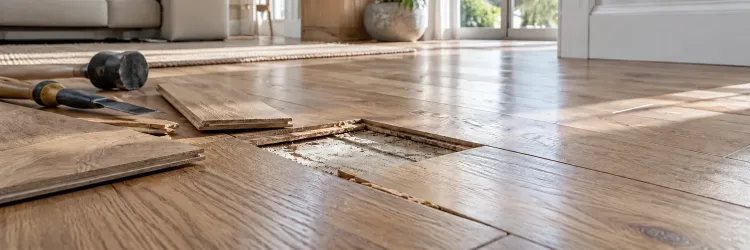
Solid timber floors can often be sanded and stained if they are structurally sound. Parquet blocks may also be suitable once loose or damaged sections have been assessed. Engineered floors require particular care: the real-wood wear layer must be thick enough for any necessary sanding. Laminate and vinyl do not absorb conventional wood stain and are not suitable for this service.
Choosing a stain colour
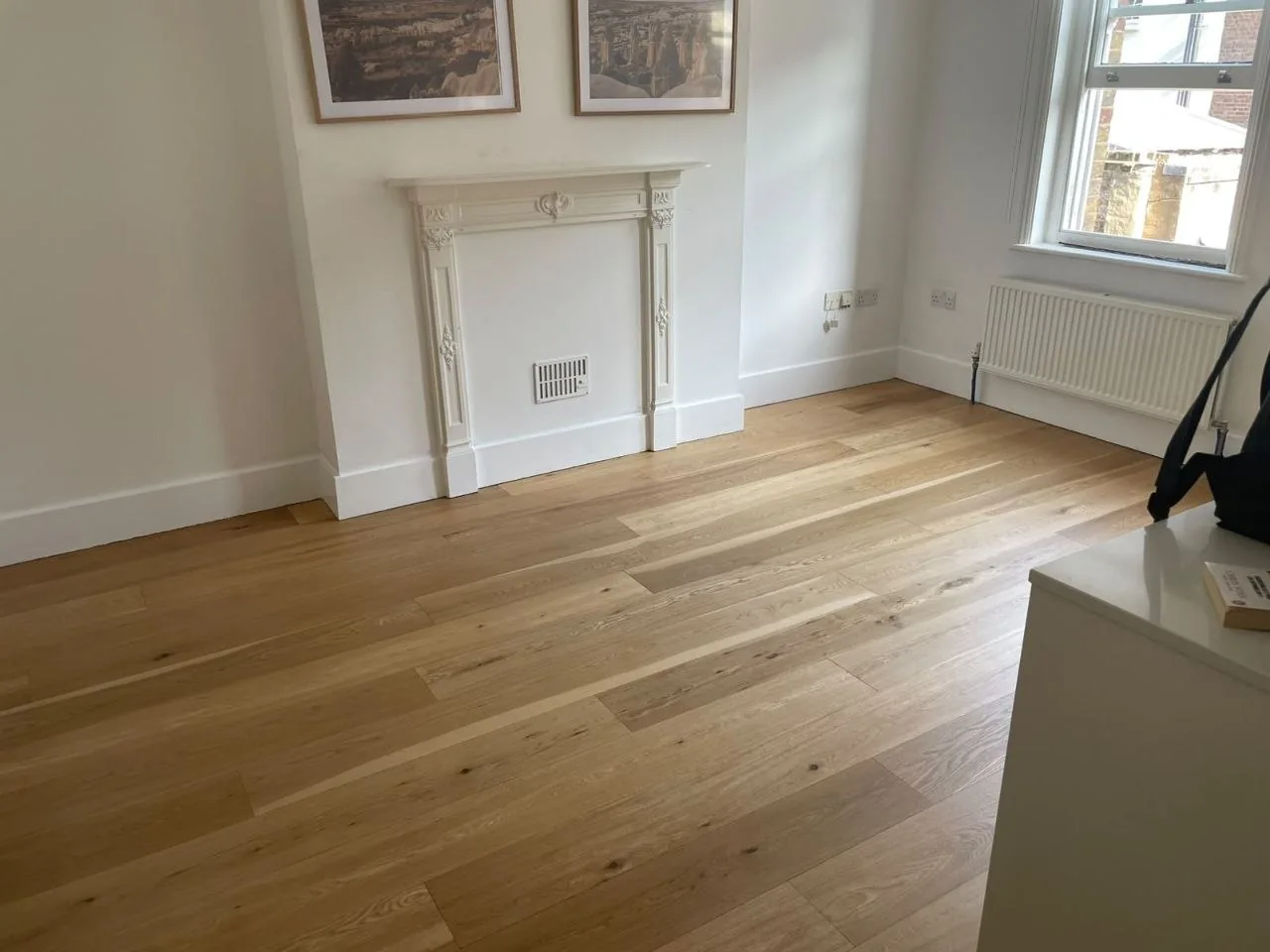
Natural oak, warm brown, walnut, grey and lighter tones can produce very different effects depending on the timber. We discuss the desired appearance and, where appropriate, recommend testing the selected colour on prepared wood. A stain generally makes wood darker or alters its tone; achieving a substantially lighter appearance may require additional preparation or a different finishing system.
How the same stain can look different on your floor
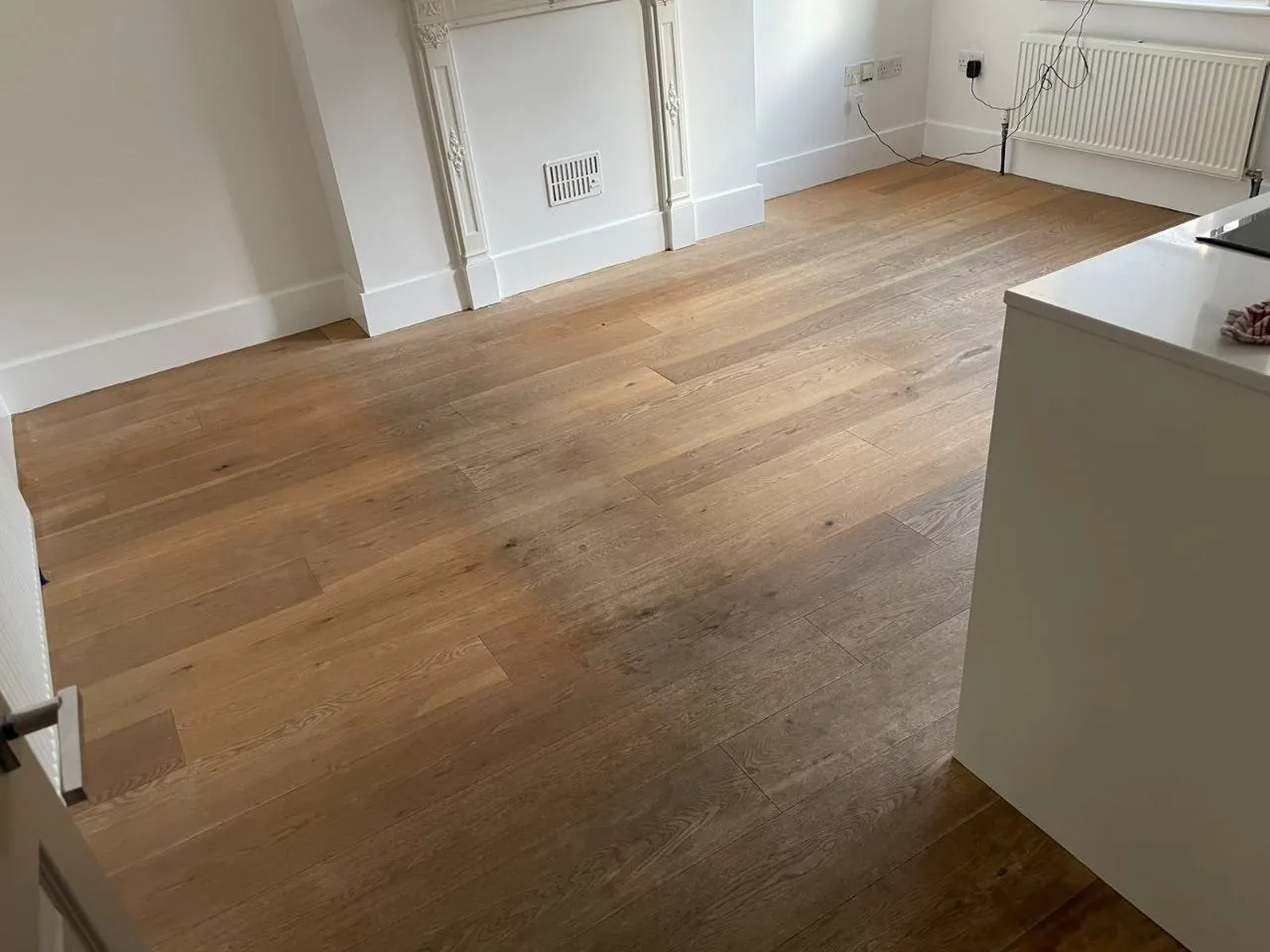
A colour chart is a starting point, not a guarantee of how a stain will look on your timber. Oak, pine and other species absorb colouring products differently. Grain direction, previous treatments and replacement boards can also affect the final appearance. Some softwoods may take colour unevenly, so preparation and product suitability matter.
Room lighting changes how the colour is perceived. A tone that looks warm in daylight can appear deeper under artificial lighting. Where appropriate, we can discuss a test area on properly prepared wood to assess the proposed shade before full application. The test must use a product and preparation method compatible with the floor and planned protective finish.
Preparation and staining
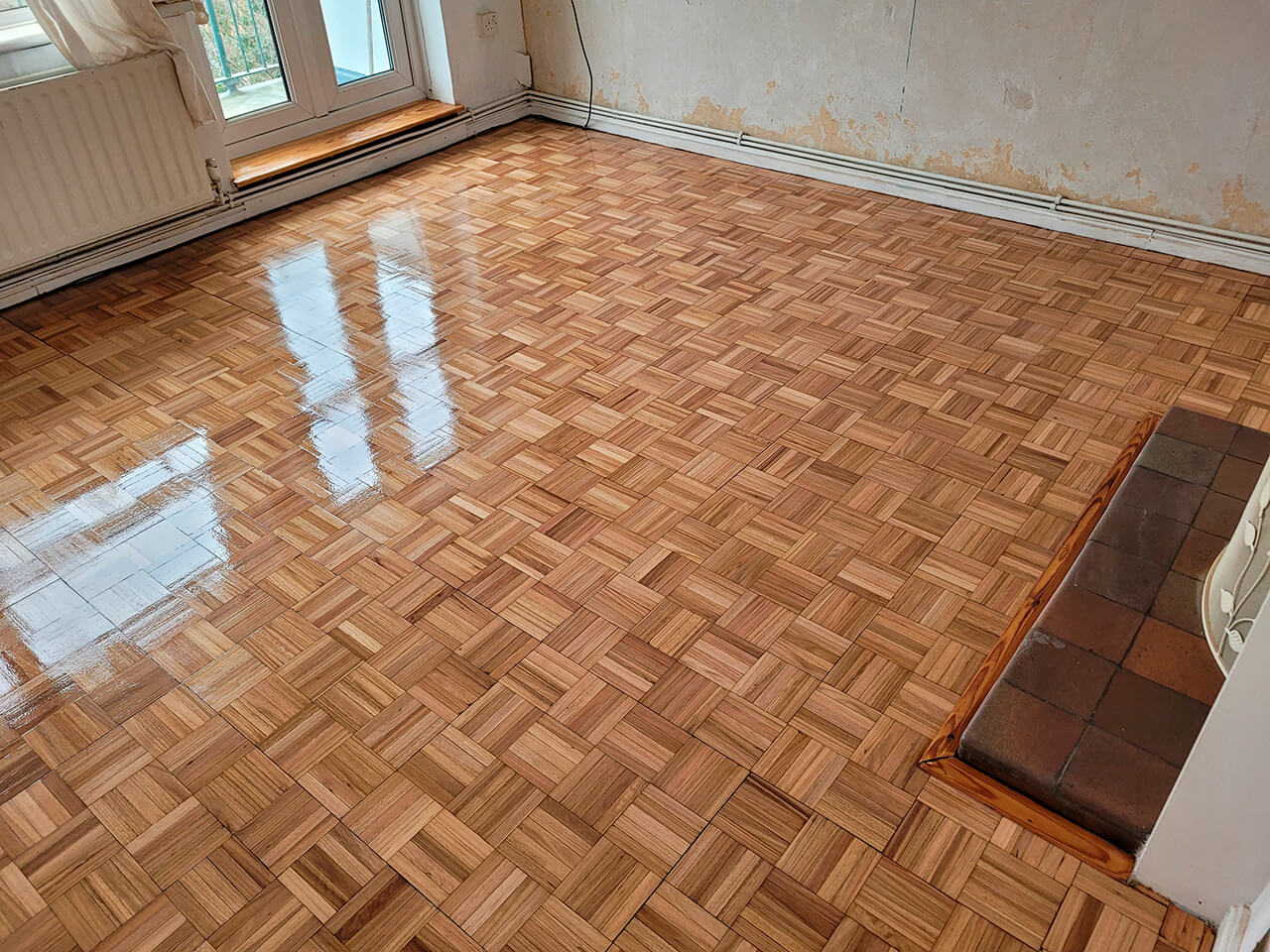
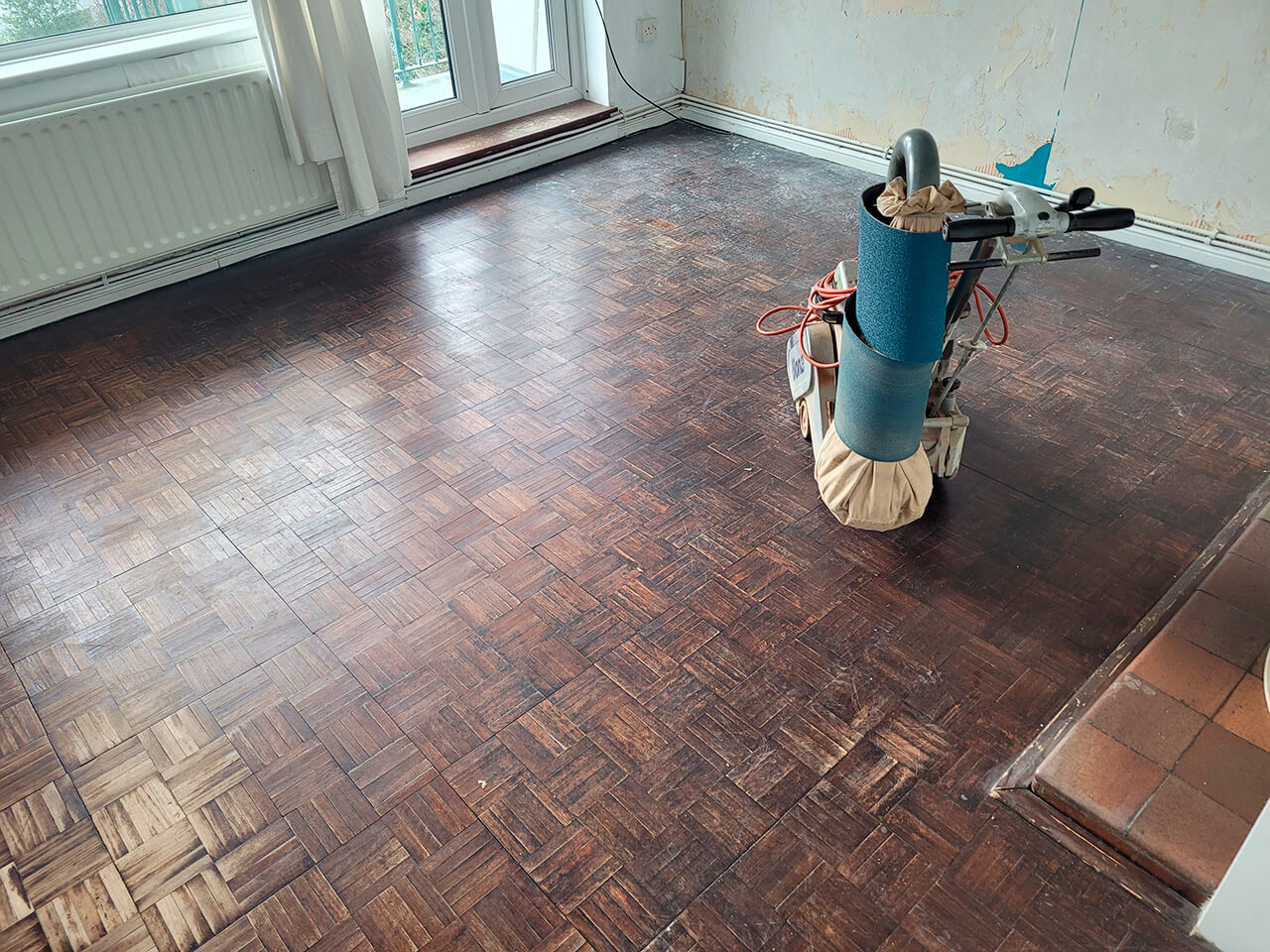
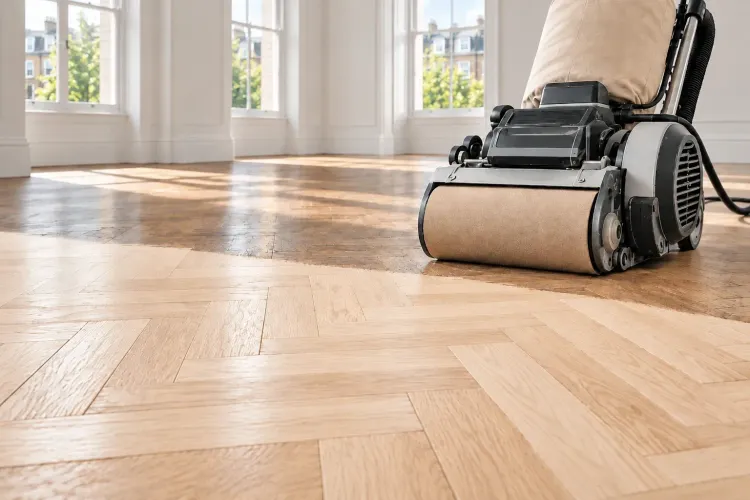
The floor is inspected before work starts. Where required, existing lacquer, oil or other coatings are removed through professional sanding, followed by suitable surface preparation. We then apply the selected compatible colouring product according to its technical instructions. Professional dust extraction reduces dust during sanding, but cannot eliminate it completely.
Stain, oil and lacquer: what is the difference?
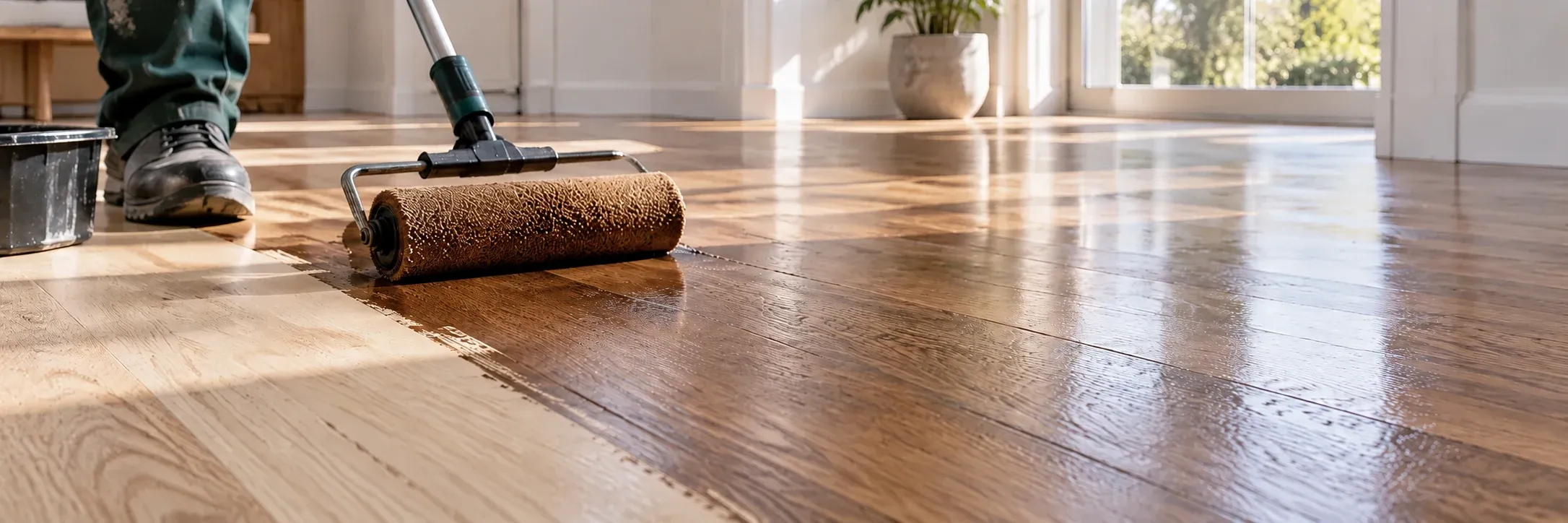
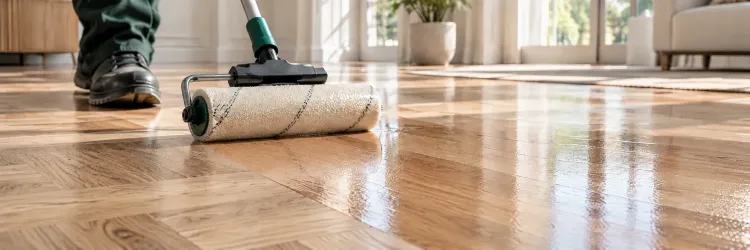
Stain primarily changes the colour of wood; a compatible oil, hardwax oil or lacquer system provides the protective finish. The system is selected for the timber, desired appearance and expected use. We can explain whether floor sealing forms part of your quotation and what future floor maintenance may involve.
Staining versus painting a wooden floor
Staining is used to change the colour of suitable exposed timber while keeping its natural grain visible. An opaque floor paint works differently, creating a coloured surface coating that can conceal the grain. They involve different products and preparation, so painting a timber floor should not be treated as an interchangeable name for our staining service.
If the aim is to make several different boards look completely identical, stain alone may not achieve that result. We explain realistic colour options, the limits of the existing timber and whether repairs or an alternative finishing system should be considered.
Wood Floor Staining: Frequently Asked Questions
Can you stain engineered wooden flooring?
Sometimes. We first check the thickness and condition of the real-wood surface and the existing finish. Some engineered boards cannot safely withstand the preparation needed for a colour change.
Can a wooden floor be stained without sanding?
A conventional penetrating stain usually requires bare, properly prepared timber. Applying it over an intact lacquered floor will not produce the same result. A compatible tinted maintenance or finishing system may offer a different option, depending on the existing coating.
Do I need sanding and sealing as well as staining?
Often, yes. Where the old finish needs to be removed, sanding is a separate preparation stage. Stain changes colour; a compatible protective finish is normally needed afterwards. We explain the required work before quoting.
How much does wood floor staining cost in London?
Our published starting price is from £12 per m² for staining. The total depends on the floor area, condition, preparation, product and finishing requirements. Request a quote for the full scope.
How long will the floor take to dry?
Drying and curing times depend on the stain and protective finish, temperature, ventilation and number of coats. We provide product-specific guidance on when the floor may be walked on and when furniture can be returned.
Will the colour look exactly like a sample?
Not necessarily. Natural wood colour, species, grain and earlier treatments can affect the result. Where appropriate, a test area helps set expectations before full application.
Will different boards take the same stain colour?
Not always. Timber species, age, grain and previous treatments affect absorption, so adjoining boards can finish in different shades. An assessment and, where suitable, a test area can help set realistic expectations.
Is a sample stain test included in every project?
Not automatically. Sample testing depends on the timber, existing finish, access and agreed scope of work. We can discuss whether a test area is appropriate and include any agreed preparation or testing in the quotation.