Why Does a Wooden Floor Feel Sticky After Cleaning?
Residue, unsuitable cleaners or excess maintenance oil can leave timber floors tacky. Find out what to check first.
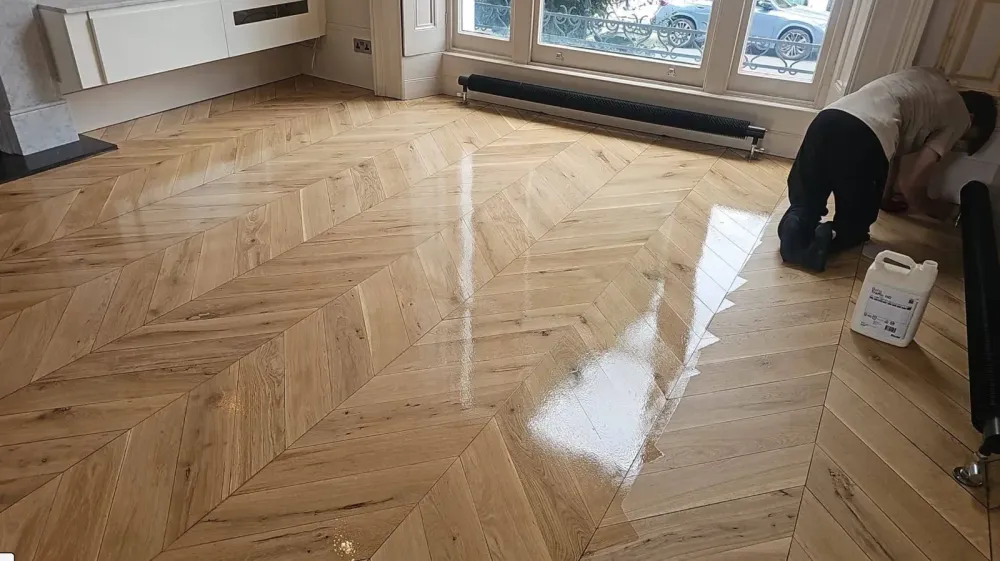
Yes, some wooden floors can be recoated without fully sanding back to bare timber. This does not mean no surface preparation: many systems require specialist cleaning and light abrasion (sometimes called screening) or another manufacturer-approved preparation method. The existing finish must be sound, the new product compatible and adhesion confirmed before a whole-floor application. If the wear has reached bare wood, if there are deep scratches or dents, or if the floor has been treated with incompatible products, a recoat is unlikely to give a durable result.
People often use "refresh" or "refinish" for very different jobs. Being clear about them makes it easier to choose the right one.
A suitable recoat can renew protection and improve the appearance of a worn but intact finish. It does not return the floor to bare timber or repair damage within the wood.
A recoat is most likely to succeed when:
The US-based National Wood Flooring Association notes that a full sand is not always necessary to restore a finish, and that a recoat may be enough unless there are visible dents, wear patterns into the timber, permanent cupping or a desire to change the colour.
Recoating is usually not suitable where:
In these situations, floor sanding or local repairs are more likely to be appropriate.
The most common reason recoats fail is poor adhesion. Compatibility is the starting point.
A lacquered floor has a protective film on top of the wood. In suitable conditions it can receive a further coat of compatible lacquer after thorough cleaning and abrasion or a chemical preparation system. Some modern lacquers are designed for overcoating previously lacquered and factory-finished floors, but manufacturers still require the surface to be clean, free from contamination and tested for adhesion first.
Many pre-finished boards leave the factory with a very hard, abrasion-resistant coating. This makes them durable, but also harder for a new coat to grip. Preparation may need to be more thorough, using products and abrasives specified by the finish manufacturer.
Oiled floors are generally maintained with products approved for that particular oil system, rather than simply coated with lacquer. A maintenance oil may be an option on a suitable surface, but application rates and preparation vary by product. Applying lacquer directly over an oily or waxy surface without a compatible preparation system is likely to create adhesion problems. Follow the specific manufacturer's instructions rather than assuming one process suits every oil or hardwax-oil.
Traditional wax residues can prevent many lacquers from bonding. Changing from a waxed finish to lacquer may require specialist stripping or full sanding; the right approach depends on the existing coating, the new product and a documented compatibility test.
If you are not sure what finish you have, our guide to oil and lacquer finishes explains how they differ.
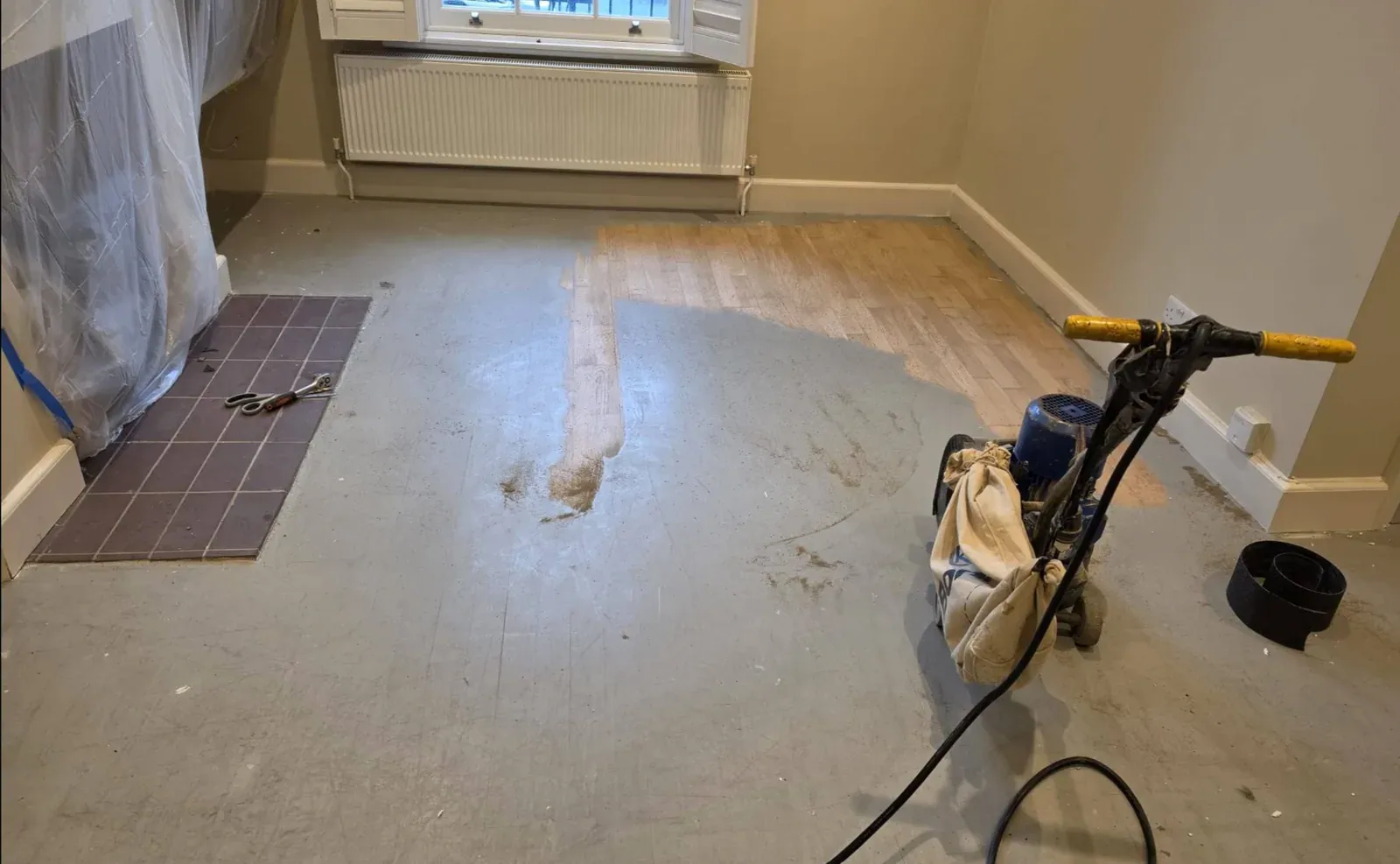
A professional recoat usually follows these stages:
The test area matters because one product can contaminate a floor in patches: a spilt furniture polish in one room, for example, may not affect another. Several test areas may be needed on a larger floor.
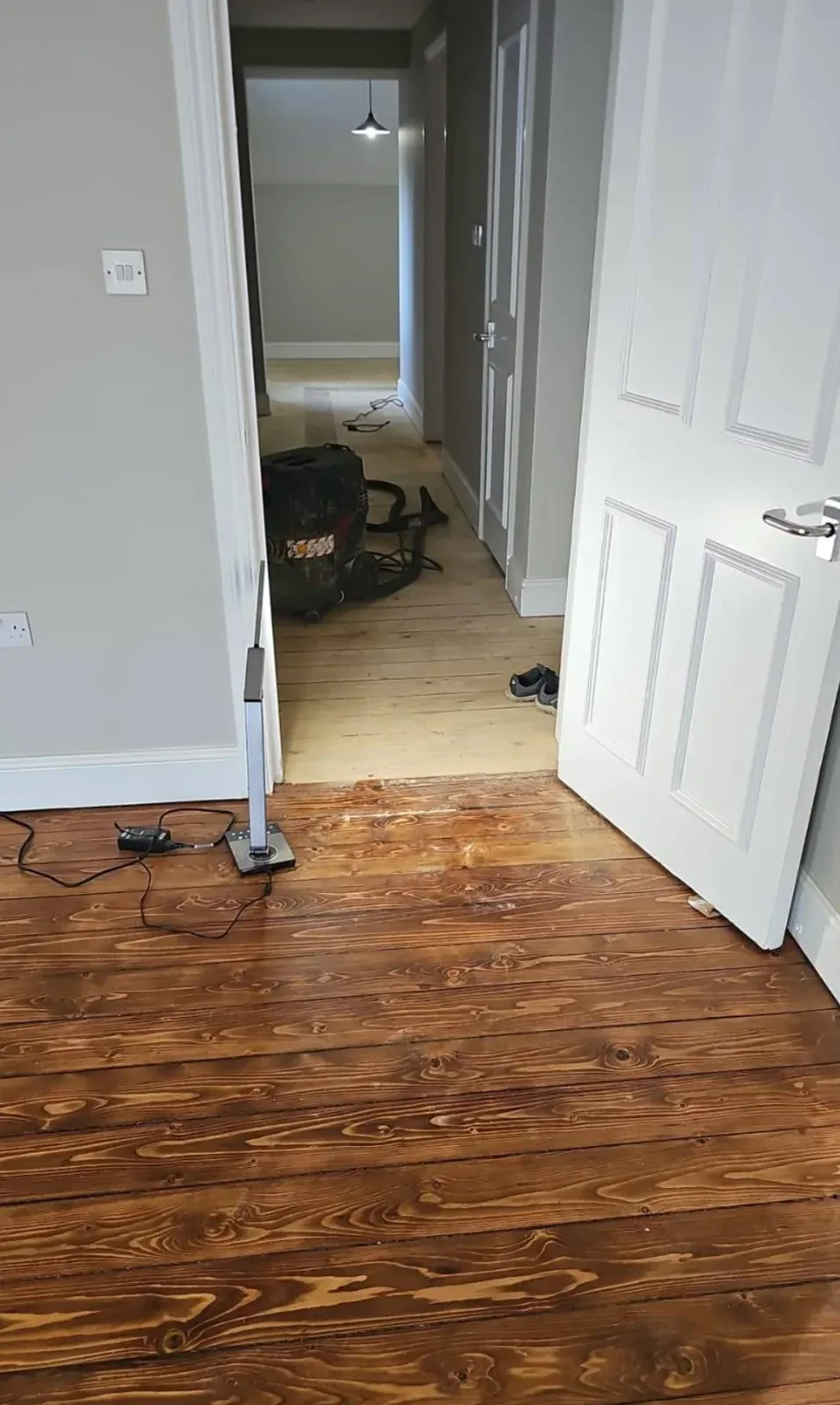
Even when a recoat is the right choice, it has limits:
Recoating before wear reaches bare wood is usually the best way to extend the time between full sandings, which is particularly valuable on engineered floors with a limited wear layer.
If your floor looks dull but the finish is intact, a compatible recoat may renew protection without a full sand to bare wood. Light surface abrasion or another approved preparation method may still be required. S Wood Floor can assess the existing finish, check for contamination and explain whether a compatible protective coat, maintenance treatment or sanding would suit your floor. See our wood floor sealing service and wood floor maintenance service for an assessment and quotation.
If the finish is intact, the wear is mainly dullness and fine surface scratches, and no bare wood is showing, a recoat may be possible. A manufacturer-approved test area helps assess adhesion and appearance, but does not guarantee the result throughout the room.
It is not generally recommended. Lacquer needs a clean, oil-free surface to bond. Oiled floors are usually maintained with a compatible maintenance oil instead.
It can soften fine scratches in the finish, but scratches and dents in the timber remain and may become more noticeable under a new coat.
Usually because the new coat could not bond to the old surface, often due to wax, polish, silicone or other residues, incompatible products, or inadequate preparation.