Can Wood Floors Be Recoated Without Sanding?
An intact wooden floor finish may be recoated without full sanding. Preparation, compatibility and adhesion still matter.
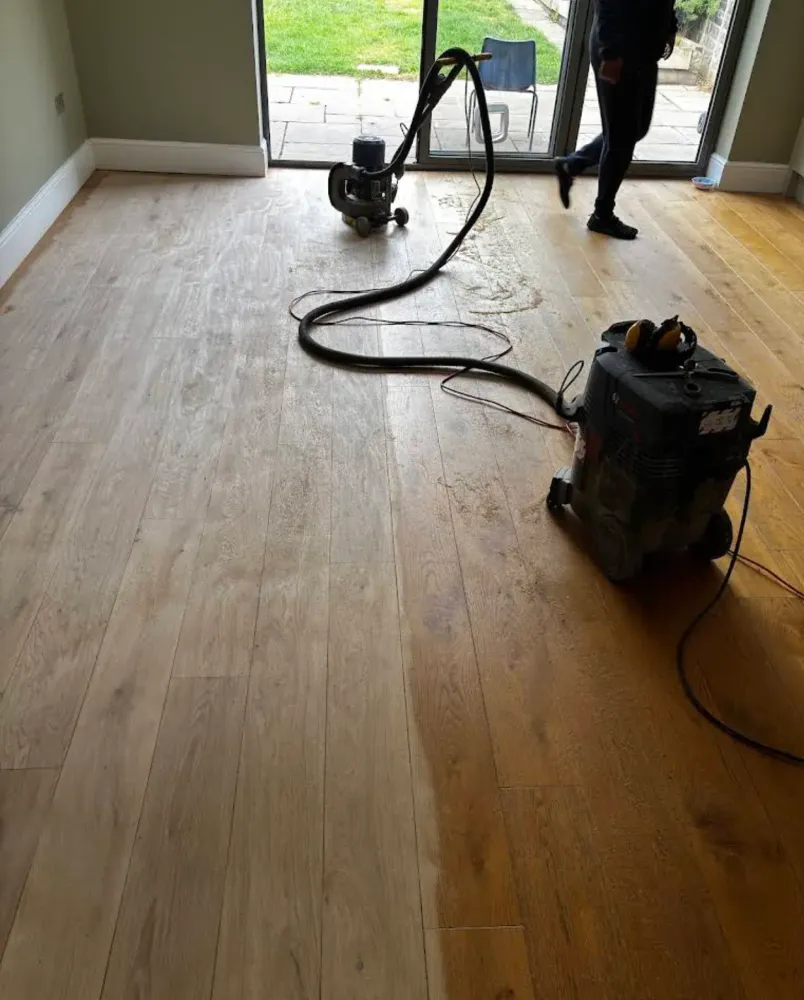
You should expect some dust when a wooden floor is sanded, even with good extraction. Modern sanding machines connected to suitable extractors collect most of the dust at the point where it is created, which makes a very large difference compared with sanding without extraction. But fine dust can still escape at the edges, during hand work, when bags and filters are handled, and when people move between rooms. "Dust-free sanding" is a common marketing phrase for this kind of controlled process; it does not mean that no dust is produced at all.
Knowing where dust comes from helps you prepare the room sensibly and ask the right questions before work begins.
A floor sanding job is not one machine doing one pass. It usually involves a main sander for the open floor, an edging machine for the perimeter, and hand tools or small sanders for corners, around pipes and under radiators. Each stage produces dust in a slightly different way.
Common sources of dust that escapes collection include:
For these reasons, an honest description is dust-controlled or dust-reduced sanding.
Many professional sanding systems connect machines to dust-extraction equipment to collect material close to the cutting point. Performance depends on the particular tools, attachments, maintenance and work practices, especially for edges and detail work.
Two things decide how well this works in practice:
It is worth understanding that a filter or containment figure describes what the extractor keeps once dust is inside it. It is not a promise that every particle produced across the room is captured. A contractor using good equipment should still prepare the room as if some fine dust will escape.
No reliable figure can be given for a particular home, because the amount depends on the floor, the old coating, the equipment and the room. A realistic expectation with well-maintained extraction is:
You should not expect the thick layer across the whole house that people often associate with older, unextracted sanding. If a contractor promises that you will find no dust at all, ask how that claim is measured.
Wood dust is not just a cleaning nuisance. The Health and Safety Executive states that wood dust can cause asthma and that hardwood dust can cause cancer, particularly of the nose. Under UK HSE guidance, the eight-hour workplace exposure limits are 3 mg/m³ for hardwood dust and 5 mg/m³ for softwood dust. When hardwood and softwood dusts are mixed, the 3 mg/m³ limit applies to the mixture.
These are occupational exposure limits, not household air-quality targets or a guarantee of safe exposure. They help explain why contractors should assess and control dust at source and use suitable respiratory protection where required. The HSE also notes that settled dust contains the fine particles most likely to damage the lungs, which is why cleaning methods matter as much as the sanding itself.
If anyone in the household has asthma or another respiratory condition, mention this when arranging the work, and consider whether they should stay elsewhere during sanding and clean-up.
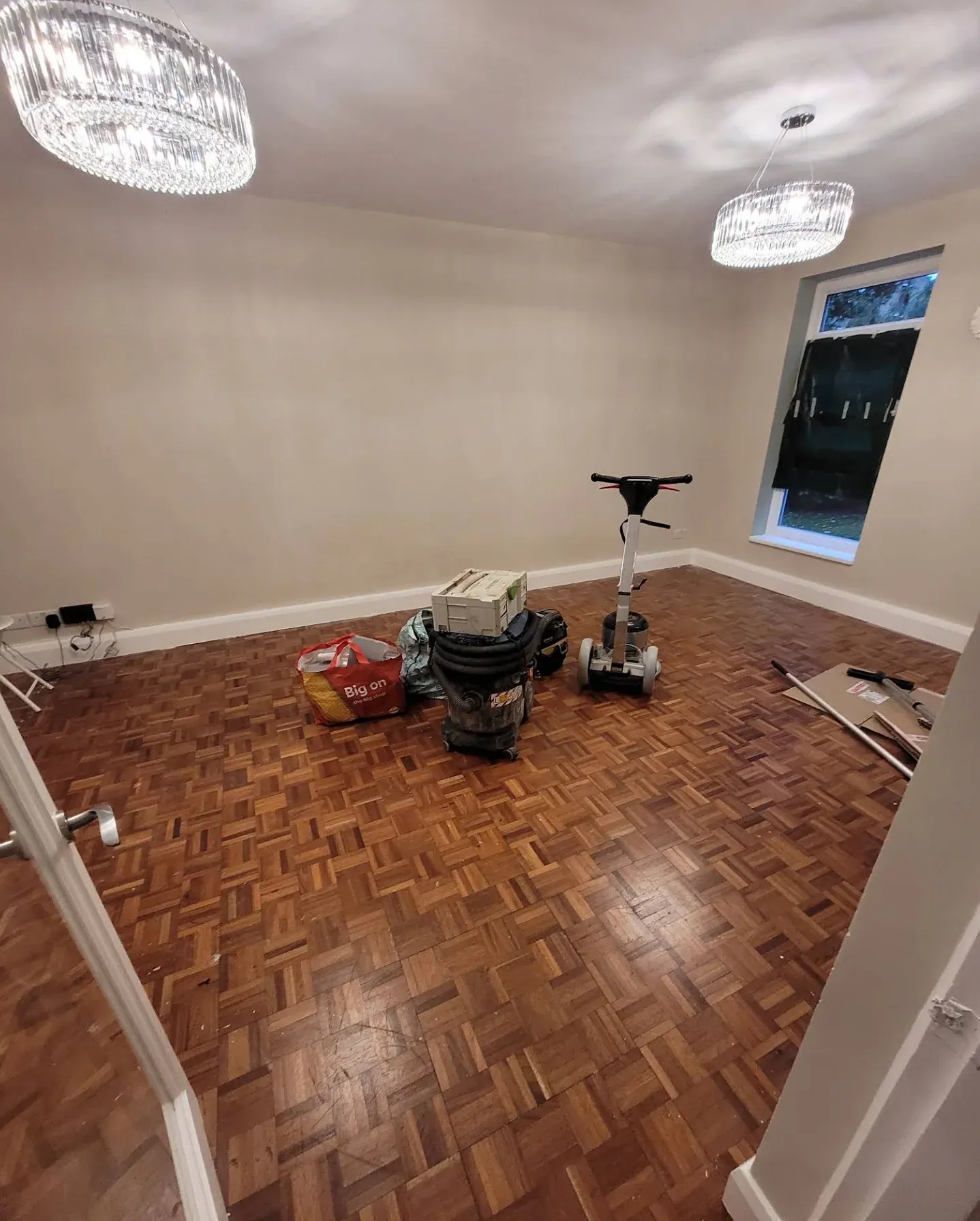
Good preparation makes a noticeable difference to how much dust ends up where you do not want it.
Before the team arrives:
On the day:
Some items, such as fitted wardrobes, built-in shelving, pianos or heavy units, may have to stay. These should be:
Electrical items, such as televisions or speakers, should ideally be removed from the room entirely.
Before agreeing to the work, it is reasonable to ask:
A contractor who answers these clearly, without promising "no dust at all", is usually describing their process honestly.
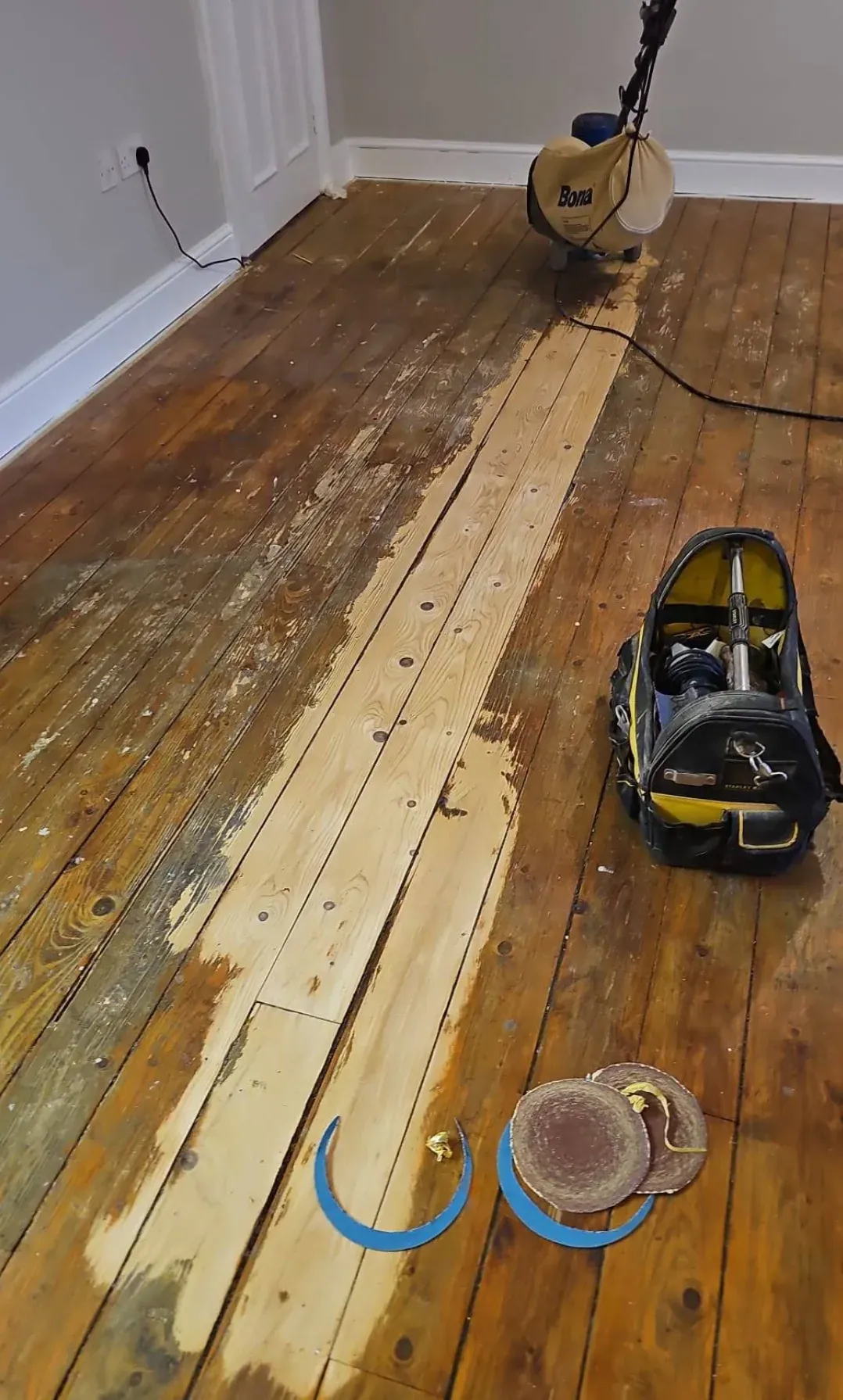
Dust control continues after the last sanding pass. Before any finish is applied, the floor needs to be thoroughly vacuumed, because dust left on the surface can be trapped in the finish and spoil its appearance. Surrounding surfaces should also be vacuumed or wiped with a damp cloth rather than swept or dusted with a dry cloth, which tends to lift fine dust back into the air.
Fine dust may remain on high surfaces or in nearby rooms after the work. Use an appropriate fine-dust vacuum and clean nearby hard surfaces according to their finish and the manufacturer's guidance, rather than dry sweeping. Avoid applying excess water to an unfinished or vulnerable timber surface.
If your floor has wide gaps that need filling as part of the work, our article on why floorboard gap filler cracks explains what affects a durable fill, and our gap filling service covers the options.
Dust cannot be removed from floor sanding entirely, but suitable extraction, careful preparation and sensible cleaning can reduce its spread. When requesting a quotation from S Wood Floor, ask how extraction, room protection and clean-up will be handled for your particular floor and site conditions. Learn more about our floor sanding service in London. You can also plan the sequence of work with our guide to floor sanding and finish drying times. Mention any furniture that must remain or anyone particularly sensitive to dust.
No. Good extraction collects most dust at the machine, but some fine dust can still escape at edges, during hand work and when equipment is emptied. "Dust-controlled" is a more accurate description.
Many people do, provided the work area is sealed off and they keep out of it. People with asthma or respiratory conditions, young children and pets may be better staying elsewhere during sanding and clean-up.
Plastic sheeting taped at the base is generally better at keeping fine dust out than fabric sheets. Remove the covers carefully so that collected dust does not fall onto the cleaned floor.
Sweeping and dry dusting lift fine particles back into the air. A suitable vacuum and damp wiping remove dust with less disturbance.