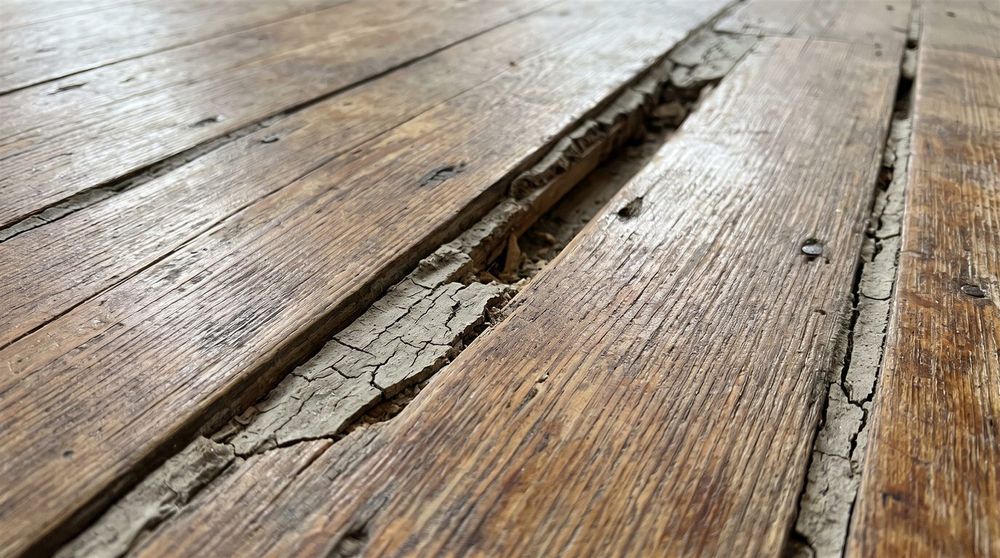
Floorboard gap filler can crack or loosen when the surrounding timber moves, the gap is unsuitable for the product, or preparation and application have not met its requirements. A failed fill does not automatically mean a stronger filler will solve the problem.
Before filling the gap again, establish whether it changes with the seasons, whether the boards move underfoot and what material was used previously. Resin mixed with wood dust and timber slivers can both be useful, but neither substitutes for stable, suitable flooring.
Why do gaps appear or reopen?
Wood responds to moisture conditions by changing dimension. A gap that is noticeable during a dry heating season may reduce when the timber takes up more moisture. A rigid material placed into a moving joint may be stressed as that joint opens or closes.
Other gaps result from damaged edges, previous alterations or poorly fitting replacement pieces. A floor can also move vertically when fixings or supports need attention. That movement is different from a small seasonal change in board width, although both can affect a repair.
Record the pattern rather than treating every opening alike. Photographs taken at different times can help show whether a gap is stable. Do not assume an old floor is permanently settled simply because it has been in place for many years.
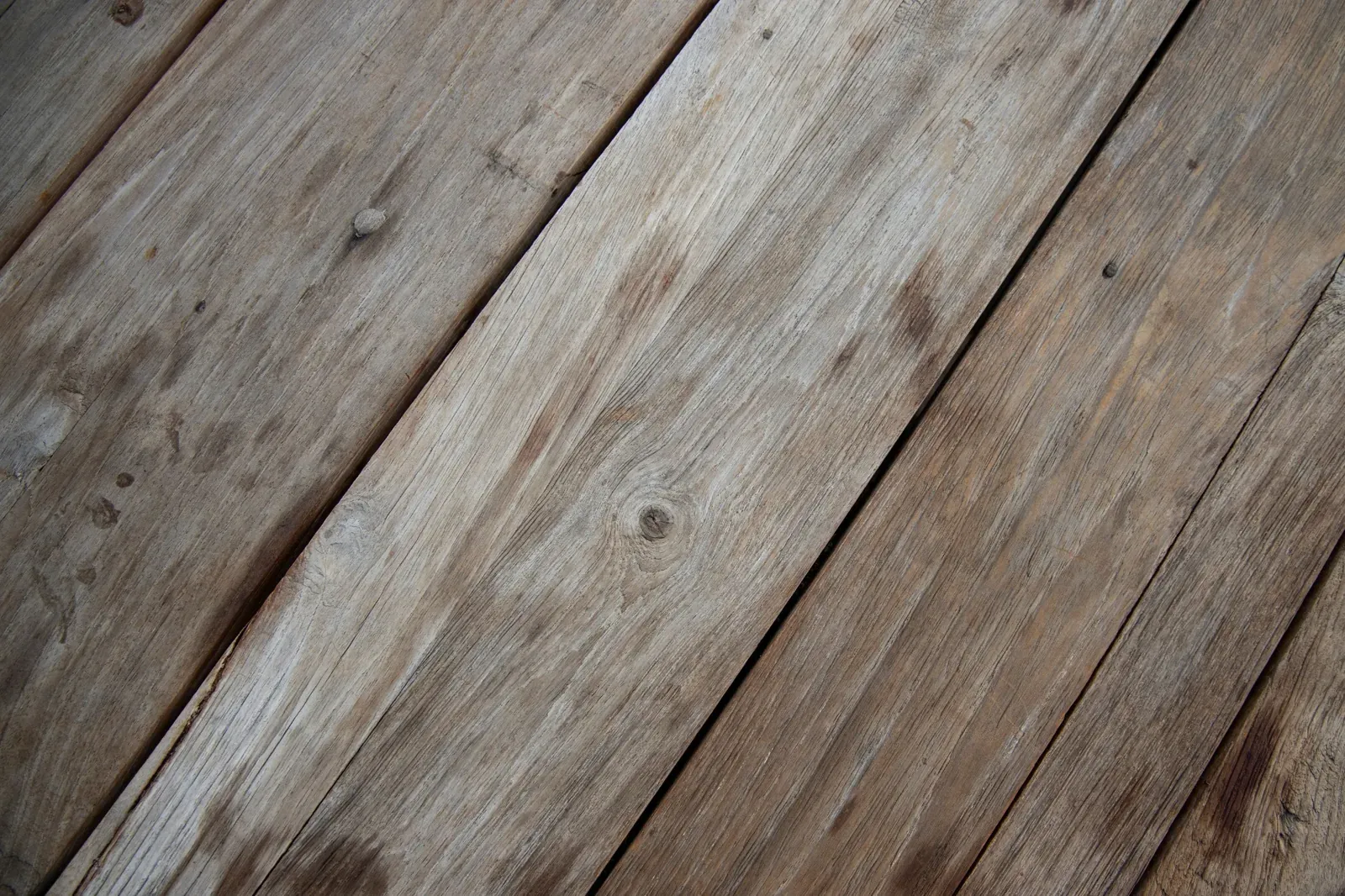
What should be checked after filler fails?
Start with the floor and the failed material together. Is filler missing from one short section, or is it breaking out across the room? Does the board move? Has there been a leak, a heating change or another repair?
If available, keep the product name and details of when the work was done. A contractor can then consider its stated uses and preparation requirements. “Resin” alone is not a complete specification: different binders and ready-mixed products behave differently.
| Finding |
Question to resolve before refilling |
| Cracking follows moving boards |
Does the floor require securing or another repair first? |
| Gaps widen and narrow seasonally |
Is filling appropriate for the expected movement? |
| A wide joint repeatedly loses filler |
Is the joint outside the chosen product's permitted use? |
| Filler separates from dirty or coated edges |
Was suitable preparation possible and completed? |
| Failure accompanies damp or swelling |
Has the moisture source been identified and resolved? |
| Only the colour looks wrong |
Is this a visual mismatch rather than a physical failure? |
These observations help frame an inspection; they do not identify the cause with certainty from a photograph.
What is resin-and-dust gap filling?
In this context, resin filling usually means a purpose-made floor-filling binder mixed with suitable fine wood dust. It is not automatically a two-part epoxy repair. The mixed material fills appropriate small joints and is prepared for the subsequent finish as directed by its manufacturer.
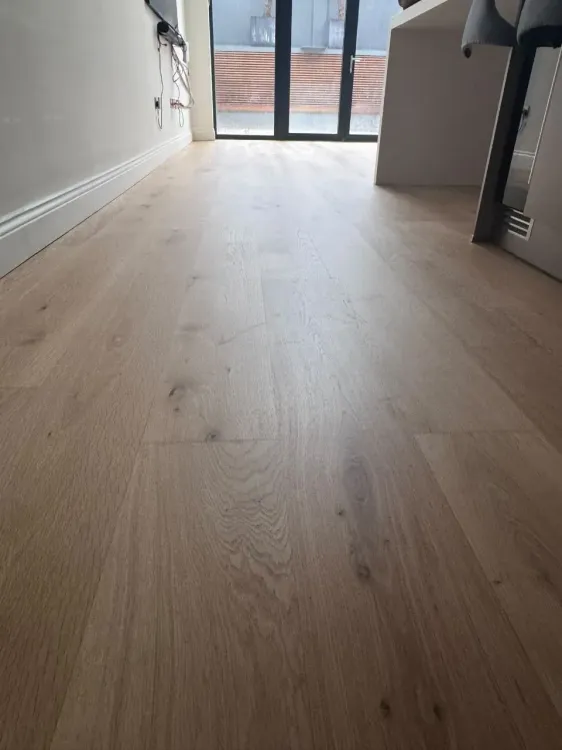
Dust from the floor can help the appearance blend, but it does not guarantee an exact colour match. The timber, dust, binder and finishing system all influence the result. A filled joint also has a different texture from a strip of solid wood.
Product limits matter. Bona's published Mix & Fill Plus information, for example, specifies gaps up to 3 mm. This is a limit for that product, not a rule that every gap below 3 mm should be filled or every wider gap needs a sliver. Its technical information should be checked against the current instructions for the material actually proposed.
The current Mix & Fill Plus technical sheet specifically warns that plank and end-grain floor gaps are normally not filled because movement can loosen the dry material. A permitted gap width therefore does not establish suitability for an old boarded floor.
For a repeat repair, ask why the selected binder is suitable for the floor construction and expected movement. Simply adding more material over loose remains is not a diagnosis.
When might timber slivers be considered?
Slivers are narrow pieces of suitable timber fitted into appropriate gaps and prepared flush with the surrounding surface. They may be considered for wider spaces in stable solid floorboards where the joint shape and condition allow a secure repair.
The timber species, dimensions, moisture condition and existing board edges all matter. A sliver is not a structural repair for an unsupported board, and it should not be forced into a joint that needs to accommodate movement.
Slivers may remain visible because the new piece differs in grain, age or colour. They do not guarantee an invisible result or prevent every future gap. The surrounding floor still responds to its environment.
Resin or slivers: what changes the decision?
| Consideration |
Resin-and-dust filling |
Timber slivers |
| Typical candidate |
Smaller, sufficiently stable joints within product limits |
Wider suitable joints in stable solid boards |
| Appearance |
Filled line; dust can help colour blending |
Timber strip; grain and colour differences may remain |
| Preparation |
Compatible, clean surfaces and manufacturer-specified mixing |
Suitable joint geometry, timber selection and fitting |
| Main limitation |
Movement and unsuitable gaps can cause failure |
Unsuitable movement or damaged edges can undermine the repair |
| Relationship to finishing |
Excess filler is prepared before the agreed coating |
Inserted timber may require trimming and sanding before finishing |
| What it cannot do |
Secure a loose support or cure damp |
Stabilise the whole floor or replace required movement allowance |
Different methods may be appropriate in separate parts of the same room. That decision should follow inspection, rather than a blanket choice based only on price or gap width. S Wood Floor's gap-filling service explains the available methods and assessment process.
When should gaps be left unfilled?
Required expansion spaces must remain available. Floating and engineered floors need particular care because their joints, installation method and manufacturer instructions may rule out the proposed filling technique.
Active moisture problems, significant board movement and unstable edges should be investigated first. Where movement persists, repeatedly filling the same space may add cost without addressing the reason it fails.
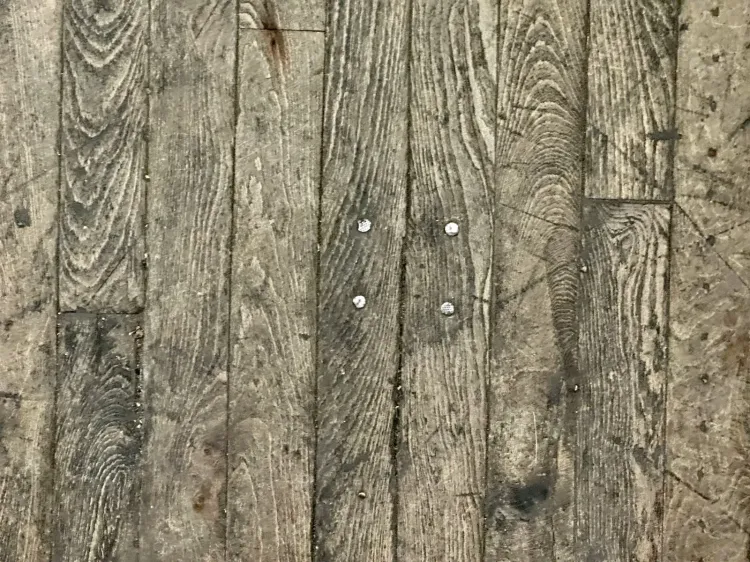
Small stable gaps may also be an acceptable feature of an old floor. The SPAB's advice on timber floorboards supports considering historic character rather than automatically removing every imperfection.
Draught reduction is a separate consideration from filling for appearance. Suspended ground floors need appropriate ventilation beneath them. Historic England explains why subfloor ventilation must remain effective. A draughty floor therefore deserves an assessment of the wider construction; do not block air bricks as a shortcut.
Does filling happen before or after sanding?
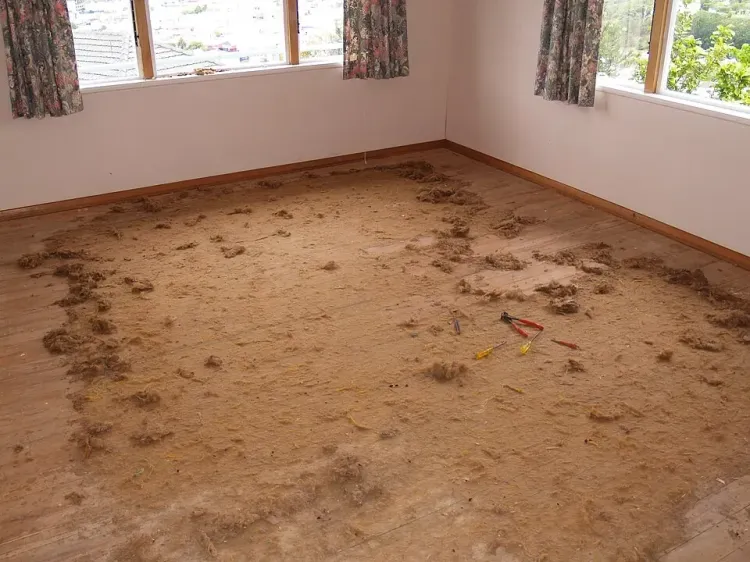
Filling is often integrated into the sanding sequence. An initial preparation stage may provide clean, suitable wood dust; the filler then needs to dry before excess material is sanded away and the finish is applied. The exact sequence comes from the selected product and condition of the floor.
Timber slivers may require fitting, adhesive setting and trimming before final surface preparation. Any necessary wood floor repairs should be addressed before treating the gaps as a cosmetic task.
An already finished floor needs a separate assessment. Filling a visible line does not guarantee that the new material will bond properly or match the surrounding coating. Ask whether local preparation is feasible and what visual difference may remain.
Frequently asked questions
Does cracked filler prove the original work was poor?
No. Preparation and product choice are relevant, but movement or moisture changes may also contribute. Establish what happened before drawing a conclusion.
Are timber slivers a permanent cure for moving gaps?
No. They are an option for suitable joints, not a way to stop natural timber movement or repair an unstable floor. Their suitability must be assessed.
Can the same method be used on parquet and old pine boards?
Not automatically. Construction, joint size, stability and product requirements differ. Loose parquet blocks also need assessment before filling; see our guide to restoring old parquet.
Ask for a repair decision, not just another fill
For a London floor with failing filler, send photographs of the whole area and close-ups of the affected joints. Include the earlier product if known, when the failure appeared and whether the boards move. The useful next step is to establish why the first repair failed and whether filling remains appropriate.