Wooden floorboards usually squeak because parts of the floor move and rub together under load. The friction may be between neighbouring boards, around a fixing, or where flooring meets its supporting structure. The noise identifies movement; it does not, by itself, identify the repair.
A local squeak may be repairable without renewing the whole floor. Widespread flexing, soft timber or a change after a leak needs closer investigation. Adding screws wherever the noise occurs can miss the cause and may damage services hidden underneath.

Where does a floorboard squeak come from?
Loose boards and fixings
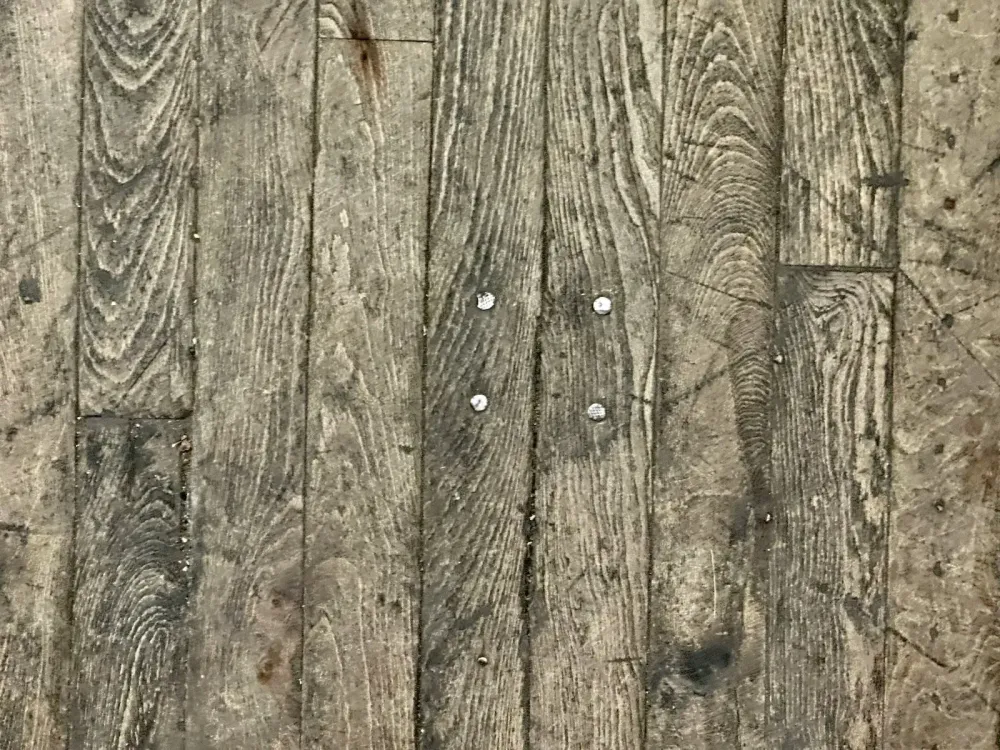
In a traditionally fixed timber floor, a board can move slightly around a nail or other fixing. Pressure from a foot makes the surfaces rub. A lifting nail head or movement at a board end can provide a useful clue, but neither is a complete diagnosis.
The fixing needs sound timber to hold into. If a board end is damaged or lacks suitable support, another fixing in the same area may achieve little. An appropriate repair depends on the condition and arrangement underneath.
Movement in the supporting floor
What looks like a problem in one visible board may originate lower down. Supporting timber, subfloor panels or the contact between layers can move. In an older London property, previous access for plumbing or electrical work may also have altered individual sections.
An unsupported cut end and a loose surface board need different treatment. It is therefore useful to tell the repairer where services were installed and whether the noise appeared after other building work.
Boards rubbing at their edges
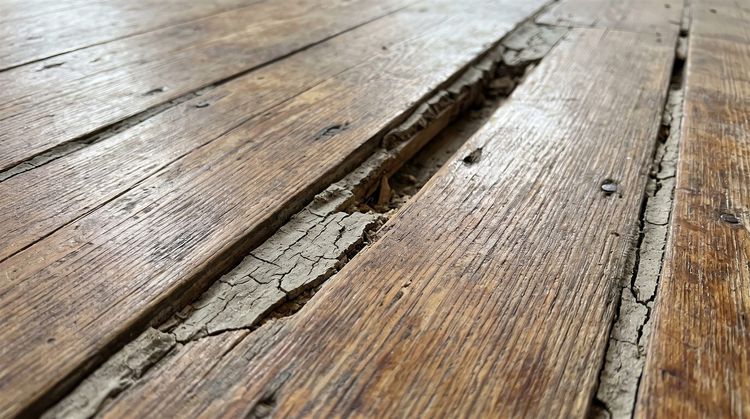
Movement between adjoining pieces can create friction. The sound may occur along a joint rather than at a visible fixing. Filling that joint does not necessarily remove the movement and should not be treated as a universal squeak repair.
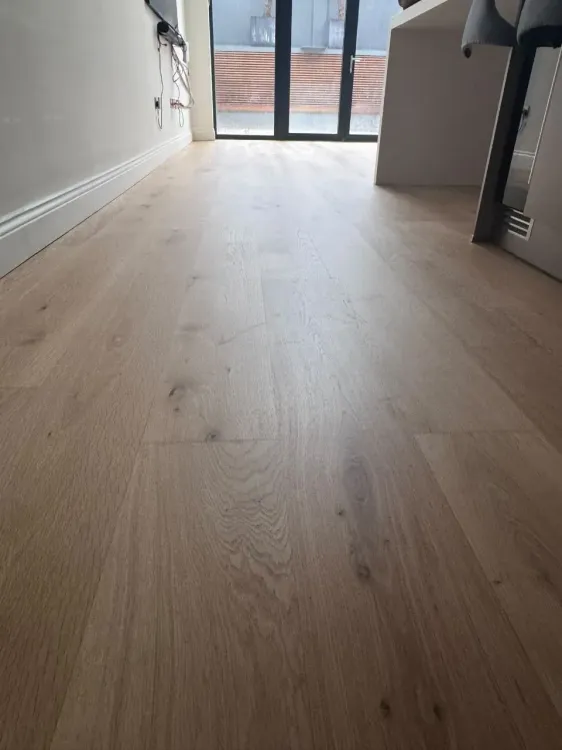
Different constructions require different responses. A floating floor, designed to move as an assembled surface, should not simply be screwed down through the visible boards. Identify the construction and follow the flooring manufacturer's requirements before choosing a method.
Why can squeaks change with the seasons?
Wood gains and loses moisture as surrounding conditions change, which affects its dimensions. Heating and ventilation influence the room environment, so a noise may become more noticeable at certain times of year.
This does not mean every winter squeak is harmless or every summer squeak indicates damp. Record when it happens, whether gaps change and whether there has been a leak. Avoid deliberately wetting the floor or making abrupt heating changes to try to silence it.
Manufacturer guidance helps explain the underlying mechanism. For example, Junckers' batten-floor instructions identify uneven shrinkage of supporting timber as a potential source of creaking. Those instructions describe a particular system; its measurements are not a repair specification for every old floor.
What can you check without opening the floor?
On an otherwise firm surface, note where the noise occurs during ordinary walking. Do not jump or repeatedly load an area that feels weak. Photograph the room and any visible gaps, damaged ends or raised fixings.
Record whether the squeak is localised, follows a route across the room, or occurs near a doorway. Note recent changes such as heating being switched on, furniture being moved or a nearby leak. A short video can help explain the symptom, although it cannot show hidden construction.
| Observation |
What it may suggest |
Useful next step |
| One board moves near a fixing |
Local fixing or support problem |
Arrange assessment of the board and its support |
| Noise changes with the season |
Moisture-related movement may contribute |
Record the pattern and discuss indoor conditions |
| A wider area flexes underfoot |
Movement may involve more than one board or layer |
Request an inspection before cosmetic work |
| Squeaking follows a leak or accompanies swelling |
Moisture may be affecting the floor |
Investigate the water source and affected construction |
| Noise began after boards were lifted |
Altered fixings or support may be relevant |
Share details of the earlier work |
These are starting points for an assessment, not diagnoses from sound alone.
When is a local repair reasonable?
A targeted repair may be appropriate where the problem is confined to a small area and the adjoining timber and supports are sound. Depending on the findings, work may involve securing a board, repairing a damaged end or replacing a section that can no longer be retained.
Access matters. A repair from below may sometimes preserve the visible surface, but it is not automatically available or less disruptive. Ceilings, services and the building's construction must be considered.
S Wood Floor's wood floor repair service covers assessment of suitable timber floors and discussion of local repair options. Any wider subfloor or structural work needs to be identified and agreed separately.
For an old floor, a successful repair may still leave visible differences in grain, colour or fixing positions. An invisible repair and permanent silence should not be assumed before inspection.
When does the problem need professional investigation?
Seek an assessment when a floor feels soft or unstable, movement is spreading, boards are lifting, or there are signs of damp or deterioration. Keep people away from a visibly unsafe section rather than testing its strength.
An inspection is also sensible when the floor construction is unknown, the same repair has repeatedly failed, or the noise comes from a concealed area. A flooring specialist may need input from another building professional if the concern extends to structural timber or services.
Do not diagnose decay or insect activity from noise alone. Old marks and holes need interpretation in context; the question is what condition exists now and whether the timber remains serviceable.
Which fixes should you avoid attempting blindly?
Do not drill or drive nails using a guessed joist position or a standard screw length from the internet. Pipework and cables can pass close to the underside of boards. Historic England's guidance on suspended timber floors describes services running within these floor voids.
Avoid injecting unidentified adhesives, forcing wedges into unseen spaces or cutting boards without understanding what they support. These interventions can create new problems and complicate later repairs.
Powders, oils and sprays are also poor substitutes for finding the cause. Even where a lubricant temporarily changes a friction noise, it does not repair loose support. Discuss any previous products with the contractor before refinishing, because surface preparation and coating compatibility matter.
Should squeaks be repaired before sanding?
Yes, where repair is needed, investigate the movement before committing to the finish. Sanding changes the surface; it does not secure loose supports. Repairing afterwards may mean disturbing a newly prepared or coated floor.
An appropriate sequence is assessment, agreed repair, confirmation of stability, then floor sanding if the remaining timber and finish condition justify it. Some local repairs do not require a whole-room resand.
If the floor also has deep marks or damaged boards, see our guide to whether a damaged floor can be sanded. The repair decision and the sanding decision should be made separately.
Frequently asked questions
Are squeaky floorboards always dangerous?
No. A noise can come from small movements in otherwise serviceable flooring. However, squeaking accompanied by weakness, significant flexing or deterioration needs assessment. Sound alone cannot establish safety.
Will gap filling stop the squeak?
Not reliably. Filling addresses a space between pieces of timber; the movement may be at a fixing or below the visible floor. Identify and address the cause first.
Can boards be repaired without lifting the whole floor?
Sometimes. The affected area and available access determine the scope. A local repair may be possible, but inspection can reveal that support or adjoining sections also need attention.
Prepare useful information for a repair enquiry
Send your London postcode, photographs, the floor type if known and a description of when the noise occurs. Mention visible movement, previous repairs and any history of water exposure. That gives the repairer a clearer starting point for deciding what needs to be inspected.