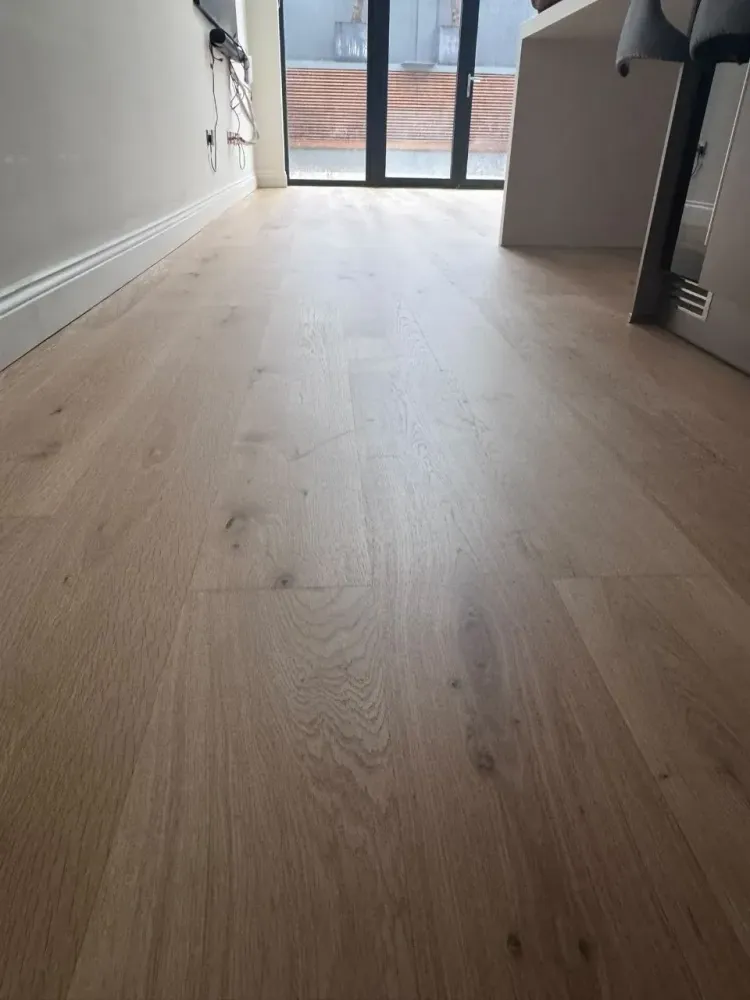
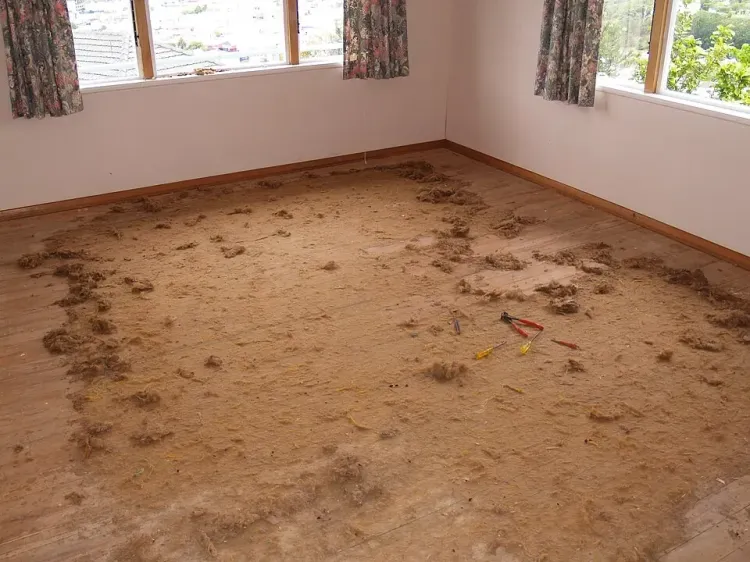
Between tenancies, inspect the floor before deciding to sand it. Some surfaces need cleaning or compatible maintenance, others need local repairs, and worn but suitable timber may benefit from sanding and refinishing. The programme must allow for the selected finish's return-to-use restrictions as well as the work itself.
For landlords and managing agents in London, the practical objective is a serviceable floor and a clear handover. Establish the condition, agree the necessary work and schedule deliveries, cleaners and new occupants around the actual coating instructions.
1. Record the floor after the property is cleared
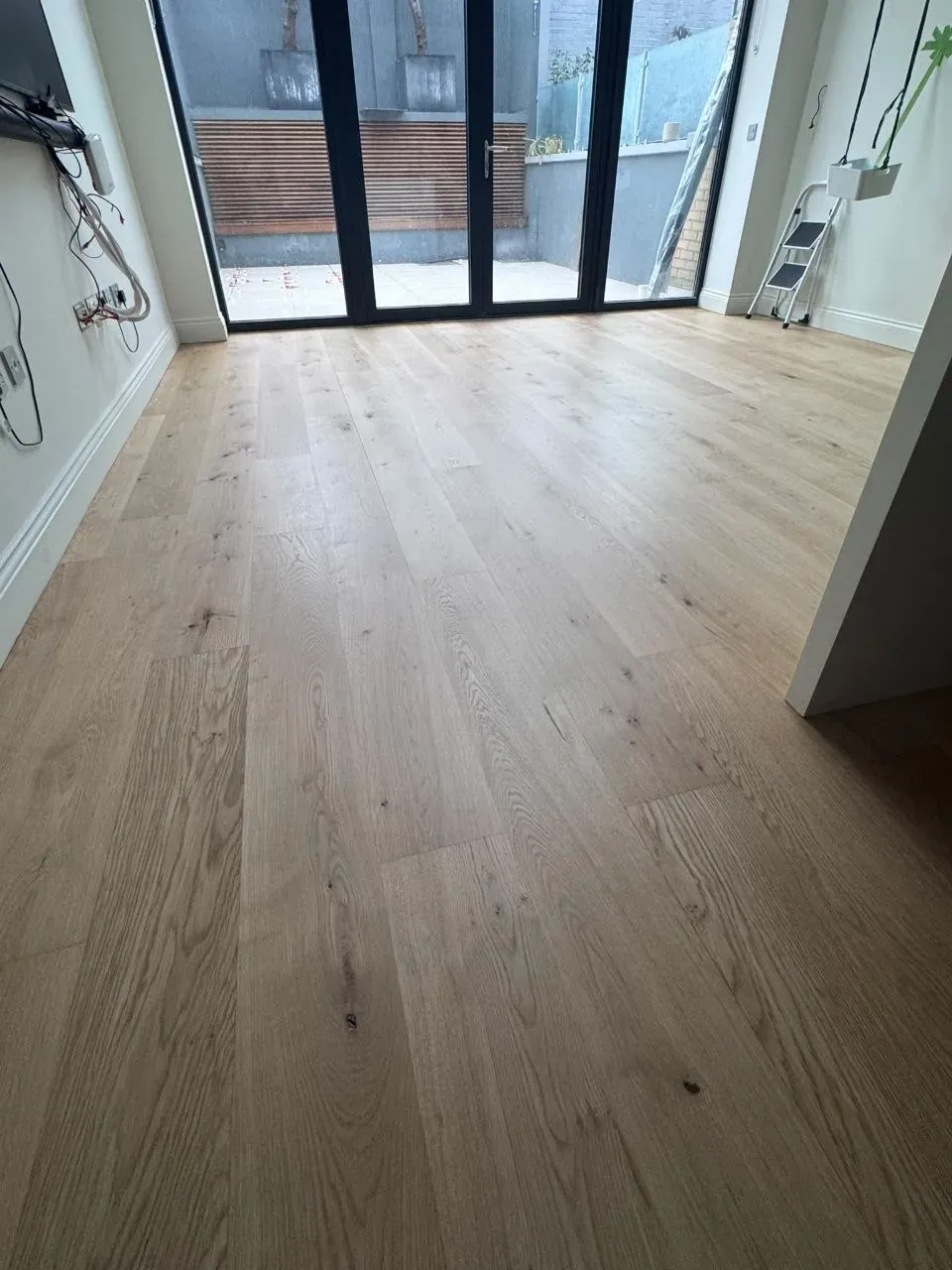
Photograph each room in useful daylight, with overall views and close-ups of damage. Record the date, approximate area and any furniture that remains. An empty room makes wear patterns and access requirements easier to assess.
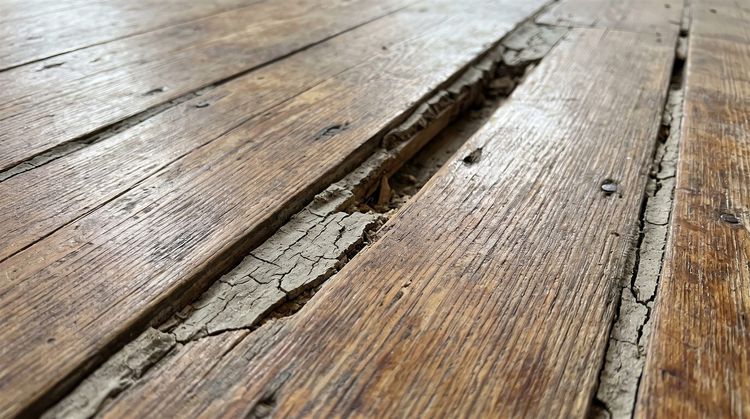
Check entrances, chair positions and routes through the property. Note dull coating, scratches, deep gouges, stains, gaps, loose boards and lifted parquet. Include previous repairs rather than assuming all visible marks have appeared during the latest tenancy.
This is a maintenance record, not a conclusion about responsibility for damage or a deposit deduction. Keep the physical repair decision separate from any tenancy dispute.
2. Identify the construction and existing finish
Find any installation documents, old invoices or maintenance instructions. A floor that looks like wood may be solid timber, engineered wood, a thin-veneer product or a different material altogether. Do not schedule machine sanding on appearance alone.
Engineered boards require assessment of the remaining real-wood layer and product specification. Some thin-veneer products are not sandable, as Kährs explains for its veneer flooring.
The existing coating also matters. A maintenance oil and a lacquer recoat are not interchangeable treatments. If the product is unknown, ask what identification, preparation or trial is needed before a new coating is proposed.
3. Separate surface wear from defects that need repair
| Condition observed |
Possible route to assess |
What must be established first |
| Dirt and light surface dullness |
Suitable cleaning or maintenance |
Existing finish and compatible products |
| Worn coating over stable timber |
Recoating or sanding, depending on condition |
Adhesion, contamination and sanding allowance |
| Isolated deep damage |
Local board repair or replacement |
Depth, support and likely visual difference |
| Loose boards or parquet |
Targeted repair before surface work |
Cause of movement and condition underneath |
| Dark marks, swelling or lifting |
Moisture investigation and repair plan |
Whether water exposure is ongoing and timber is sound |
These are options to investigate, not guaranteed outcomes. A stain may extend beyond the depth that can safely be sanded, and a new coat cannot secure a loose board.
Record any previous leak, including one that appeared to dry out. The cause and condition of the floor need checking before the mark is treated as purely cosmetic.
4. Choose the least extensive suitable work
A full resand should respond to a floor's condition, not happen automatically at every tenancy change. Preserving sound timber and a serviceable coating avoids unnecessary removal of material.
Where damage is confined to a small area, local wood floor repairs may be appropriate. Discuss whether the repaired section will need finishing and how closely it can match the rest of the room. Grain, age and sheen differences may remain visible.
For widespread coating wear on suitable timber, consider wood floor sanding and refinishing. Ask the quotation to distinguish repairs, preparation, sanding and the protective finish. A simple instruction to “make the floor good” leaves too much open to interpretation.
5. Build the programme backwards from the next use
Start with the proposed handover and furniture-delivery dates. Then establish which finish is suitable and how long it must remain free of traffic, heavy loads, coverings and cleaning.
Do not assume a three-day void period can accommodate every restoration. The actual repair scope, coating system and conditions may make the planned handover impractical. Discuss this before committing to a start date.
| Milestone |
What to agree |
Who needs the information |
| Clear access |
Keys, retained items, parking and working hours |
Agent, landlord and contractor |
| Complete disruptive work |
Repairs and other trades that could damage the finish |
All contractors |
| Apply final coat |
Exact product system and application time |
Flooring contractor and agent |
| Permit limited access |
When and how people may enter |
Cleaners, inspectors and decorators |
| Return furniture and coverings |
Separate instructions for loads, rugs and protection |
Movers and incoming occupants |
| Begin routine care |
Compatible products and timing |
Tenants and cleaning provider |
In a flat, pay particular attention to the entrance route. A finished hallway can prevent access to otherwise usable rooms. Staged work may be possible, but it needs an agreed sequence rather than improvised foot traffic across a fresh finish.
6. Keep drying and curing separate in the handover notes
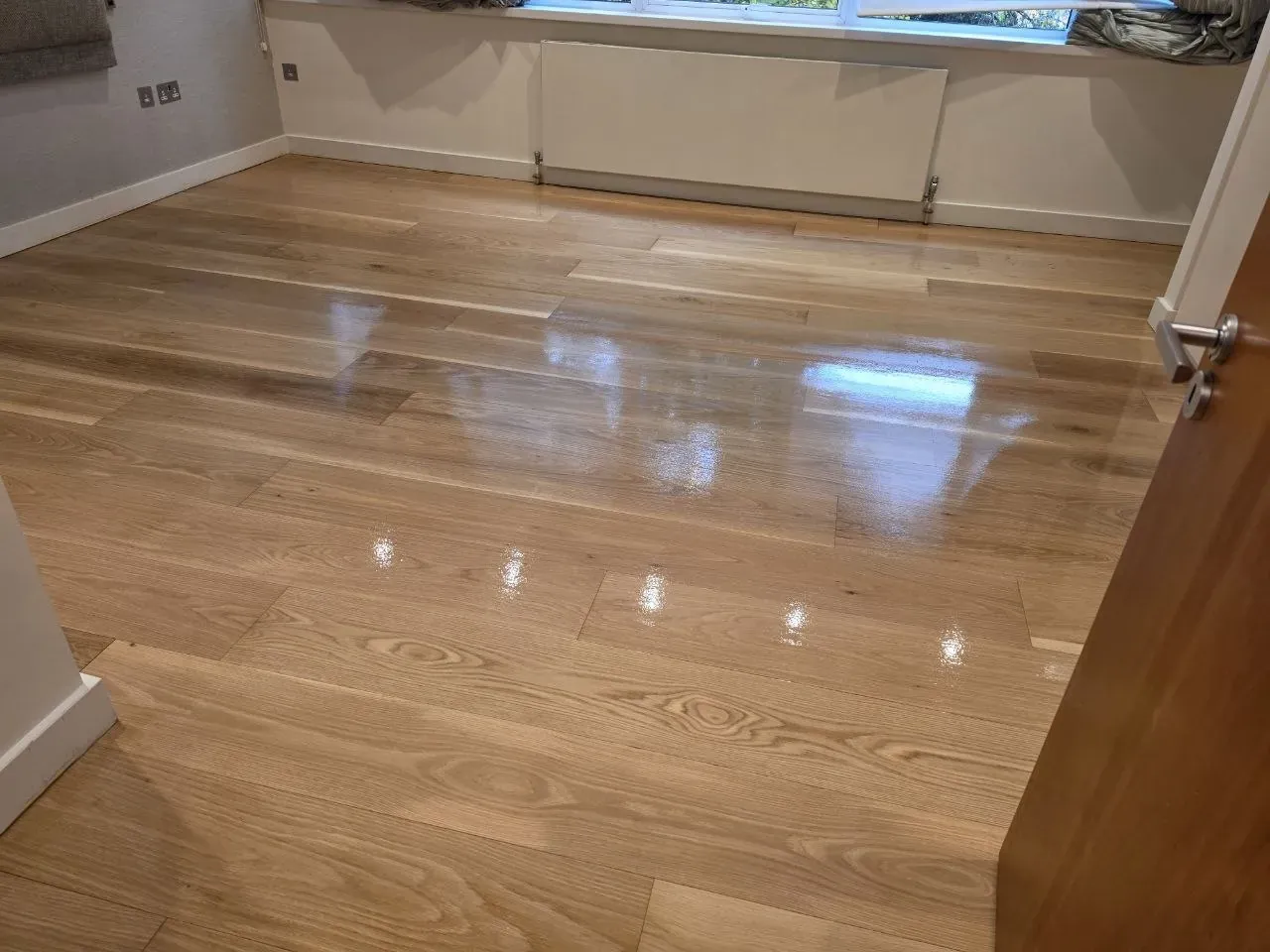
Drying describes readiness for a specified next step; full curing describes development of the finish's intended properties. Permission for light traffic is not automatically permission for a sofa delivery, floor covering or wet cleaning.
For example, Bona Traffic HD's UK information gives different periods for light use and covering under stated conditions. Osmo UK's guidance also distinguishes a dry surface from curing. These examples demonstrate the need for a product-specific plan; they do not specify the coating for your property.
Ask for the product name, final-coat date and practical access instructions in writing. Record any restriction that continues beyond the tenant's arrival and ensure it is workable. If the required furniture or cleaning access conflicts with the instructions, resolve the schedule before proceeding.
7. Coordinate cleaners, deliveries and remaining trades
Complete disruptive or wet work before the floor's final preparation wherever practical. Agree any later touch-ups and the protection method with the flooring contractor.
Do not assume cardboard, plastic sheeting or a breathable covering is acceptable on a fresh coating. The manufacturer may prohibit covering during a specified period. Adhesive tape should not be applied directly to the new finish without approval.
When furniture return is allowed, lift items and use clean, suitable pads. Check castors and appliance feet. Give cleaners the actual coating instructions instead of leaving a generic request to deep-clean the entire property.
8. Give the next tenants a short care sheet
Provide a simple, usable record:
- The finish name and compatible cleaning product.
- Any temporary restrictions, with clear dates or times.
- Advice to remove grit regularly and deal with spills promptly.
- Instructions to lift furniture and maintain suitable protective pads.
- A contact route for leaks, lifting boards or other changes.
Our wood floor lifespan guide explains why construction and ongoing care both matter. It should accompany, rather than replace, the instructions for the installed floor and finish.
Keep the same information with your property records so that the next maintenance visit begins with a known product history.
Frequently asked questions
Does a rental floor need sanding whenever tenants change?
No. Assess the coating, timber and damage. Suitable maintenance or a local repair may be enough, and some floors cannot safely be sanded again.
Can the new tenants move in as soon as sanding ends?
Not necessarily. Finishing and its access restrictions still need to be considered. Confirm that the intended furniture, cleaning and normal use are compatible with the programme.
Is commercial flooring advice relevant to every rented flat?
No. A rented home remains a domestic-use scenario. For genuinely commercial premises or relevant shared-use areas, discuss the actual traffic and access requirements with the contractor.
Prepare an enquiry that can be assessed properly
Send the postcode, room sizes, photographs, known floor and finish details, earliest access date and intended handover. Include the schedule for other trades and furniture deliveries.
Where the project involves business premises or suitable shared-use spaces, S Wood Floor's commercial wood floor service provides a relevant starting point. Scope and suitability still need assessment. A clear brief makes it easier to agree necessary work and a realistic return to use.