Floor sanding has two separate timescales: the work needed to prepare and refinish the timber, and the wait before the room can return to normal use. The area, repairs, layout and chosen finish determine the first. The finish manufacturer's instructions and conditions in the room determine the second.
There is no reliable fixed number of days for every floor. A clear, stable room and a flat with loose boards, several doorways and a shared access route need different plans. Ask for a job-specific programme that includes furniture return, rather than only the day the machines leave.
What is included in the floor sanding timetable?
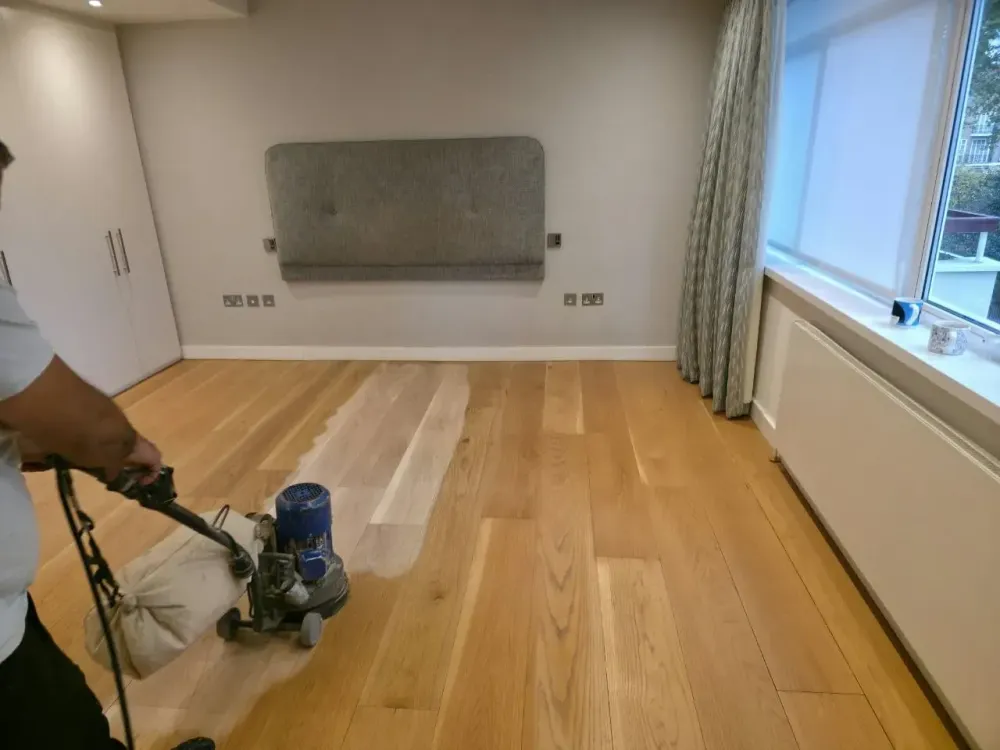
Sanding removes an existing coating and a controlled amount of timber where the floor is suitable. Refinishing adds the agreed protective coating. Repairs, staining and gap filling are separate operations that may be needed alongside them.
| Stage |
What happens |
What can extend it |
| Assessment and preparation |
Identify construction, check suitability and agree access |
Unknown wear-layer thickness, retained furniture or moisture concerns |
| Repairs |
Address agreed loose or damaged sections |
Hidden defects, replacement timber or adhesive requirements |
| Sanding |
Prepare the main area, edges and awkward sections |
Uneven wear, old coatings, stairs and detailed edges |
| Finishing |
Apply the compatible primer, stain or finish system |
Additional stages and required intervals between coats |
| Return to use |
Reintroduce walking, furniture, coverings and cleaning |
Product restrictions and unsuitable drying conditions |
A programme should show these stages separately. Drying intervals are part of the work, even when nobody is operating a machine.
What affects how long the work takes?
The condition matters as well as the area
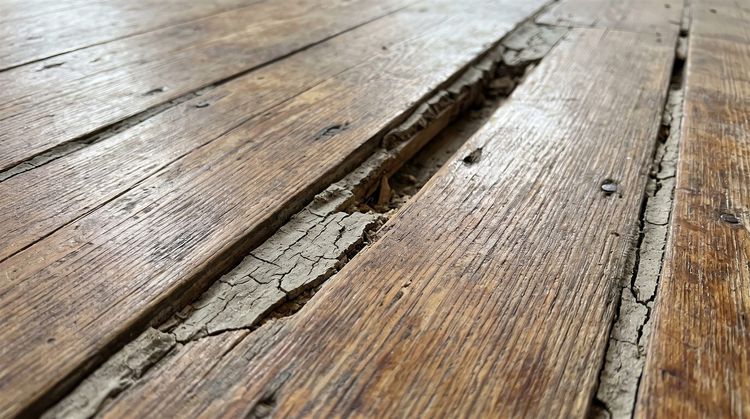
A larger, open room may be simpler to work around than several small rooms with alcoves and thresholds. Loose boards and damaged ends need attention before surface preparation. Deep marks cannot always be removed safely by continuing to sand.
Engineered flooring requires particular care: the real-wood surface may be too thin for another sanding. If suitability is uncertain, establish it before booking removal vans or arranging temporary accommodation. Our guide to assessing a damaged wooden floor explains the distinction between surface wear and problems that need repair.
Access and other trades affect the programme
In a London flat, the hallway may be the only route to bedrooms or the front door. Agree how people will enter and leave before work starts. Discuss equipment access, parking arrangements and any building restrictions on noisy work.
Complete work that could damage or contaminate the new finish first wherever practical. Any later decorating or delivery visits need to fit the agreed access restrictions. Moving furniture repeatedly between half-finished areas should not be assumed possible.
How should you prepare the room?
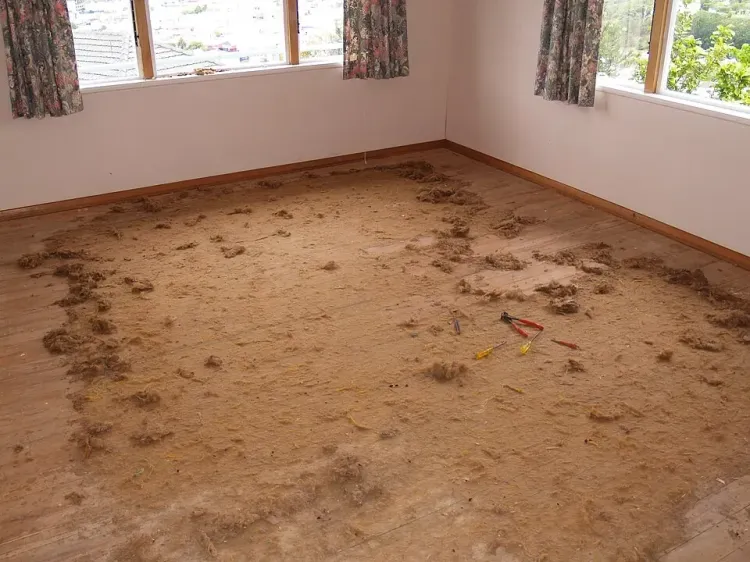
Confirm who will remove furniture, lift existing coverings and dispose of waste. Include heavy or fixed items in that discussion: a piano, fitted wardrobe or appliance needs a specific arrangement.
Remove loose belongings from the work area and identify a storage location that will remain accessible. Tell the contractor about previous leaks, repairs and any known pipes or cables below the boards. Keep children and pets away from the working area and freshly finished surfaces.
Dust extraction helps reduce sanding dust, but the process is not completely dust-free. Agree protection for adjoining spaces and any cleaning required before the room is used again. Do not cover a newly finished floor simply to make it available to other trades.
Drying time and full curing time are different
Drying time describes a stage at which a coating is ready for a specified next step, such as another coat or limited foot traffic. These permissions may have different timings.
Full curing time is the period needed for the finish to develop its intended properties. A surface that feels dry may still be vulnerable to furniture pressure, coverings or cleaning.
“Ready for light use”, “ready to cover” and “fully cured” are not interchangeable. Nor does a short interval between coats mean the whole room is ready for occupation.
Oil versus lacquer: compare the exact products
The examples below illustrate why the product name matters. They are manufacturer guidance, not a promise that S Wood Floor will use either product or complete your project within those times.
| Example product |
Published timing |
What it means for planning |
| Bona Traffic HD, UK product information |
Recoating: 2–3 hours; light use: 6 hours; covering: 3 days, under stated conditions of 20°C and 60% relative humidity |
Permission to walk does not mean permission to cover the floor; consult the complete system instructions |
| Osmo Polyx-Oil Original, clear finish |
UK product page lists 8–10 hours drying |
This is not a full-cure or furniture-return guarantee; coloured versions have different guidance |
Sources: Bona Traffic HD UK technical information and Osmo Polyx-Oil Original UK.
The Traffic HD technical sheet linked from Bona's UK page also restricts heavy objects and damp mopping during the first three days. If the system includes Bona Craft Oil 2K, it specifies a week before covering. This is why the complete coating system matters, not just the topcoat name.
Osmo UK's after-application guidance distinguishes light traffic after drying from an approximately 10–14-day curing period, during which it advises against rugs and carpets. Other regional Osmo guidance gives longer periods. Use the current instructions for the exact UK product and obtain clarification if the documents supplied with the job differ.
Do not assume all oils are slower than all lacquers. Formulations, coat systems and conditions vary. Bona Traffic, Traffic HD and other named variants should not be treated as interchangeable products.
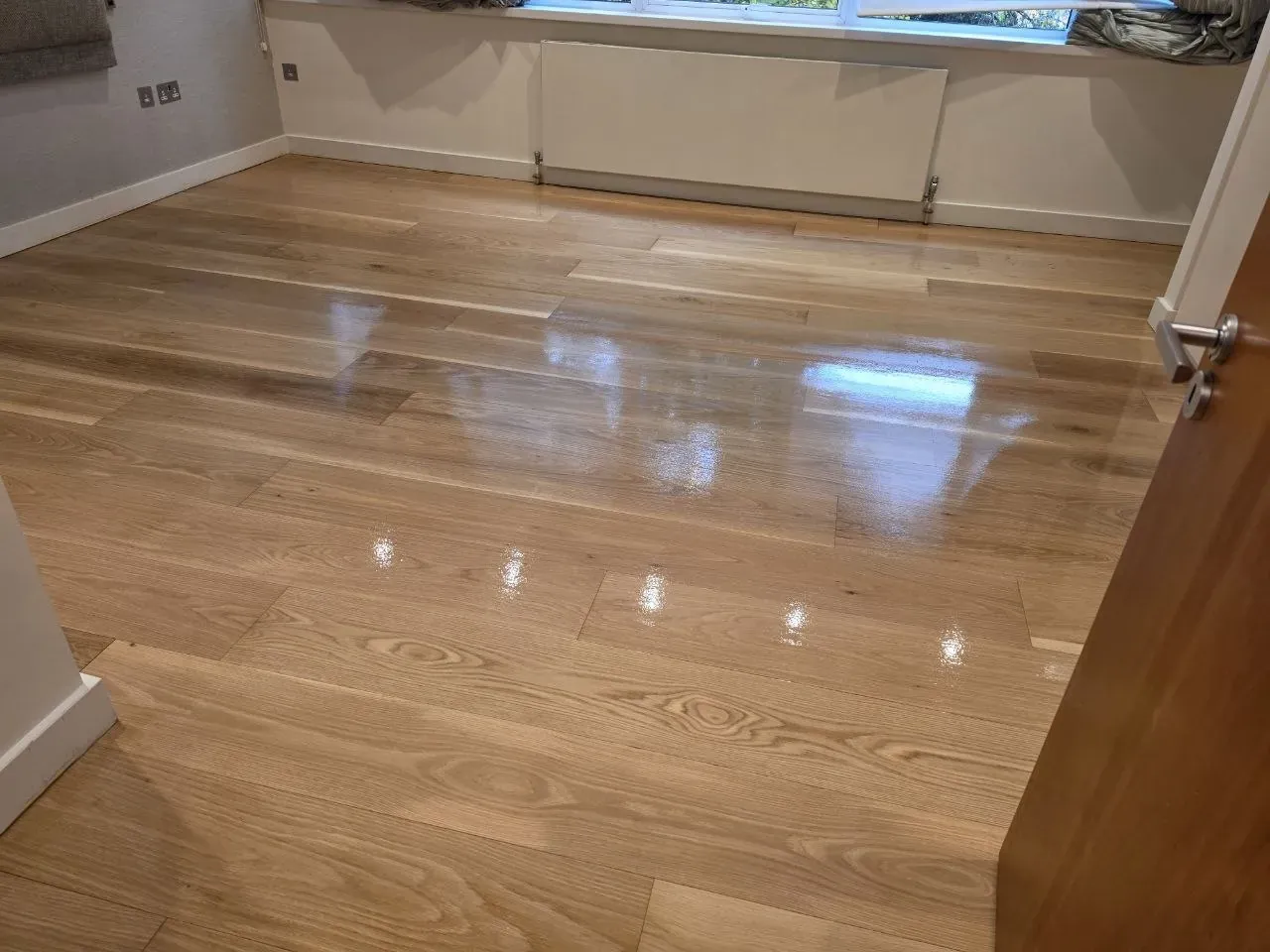
When can you walk on the floor and return furniture?
Ask for written guidance covering four separate milestones:
- Light walking: when access is permitted and what precautions apply.
- Furniture: when ordinary items and heavy loads may return.
- Rugs and coverings: when the coating may safely be covered.
- Cleaning: when the recommended cleaning method can begin.
Record when the final coat was applied. Calculate the relevant waiting period from the point specified by the manufacturer, not from the start of sanding.
Once furniture return is permitted, lift items into place and use suitable clean protective pads. Dragging a sofa across the room is a different load from walking through it. Discuss large appliances, castors and furniture with a broad base separately.
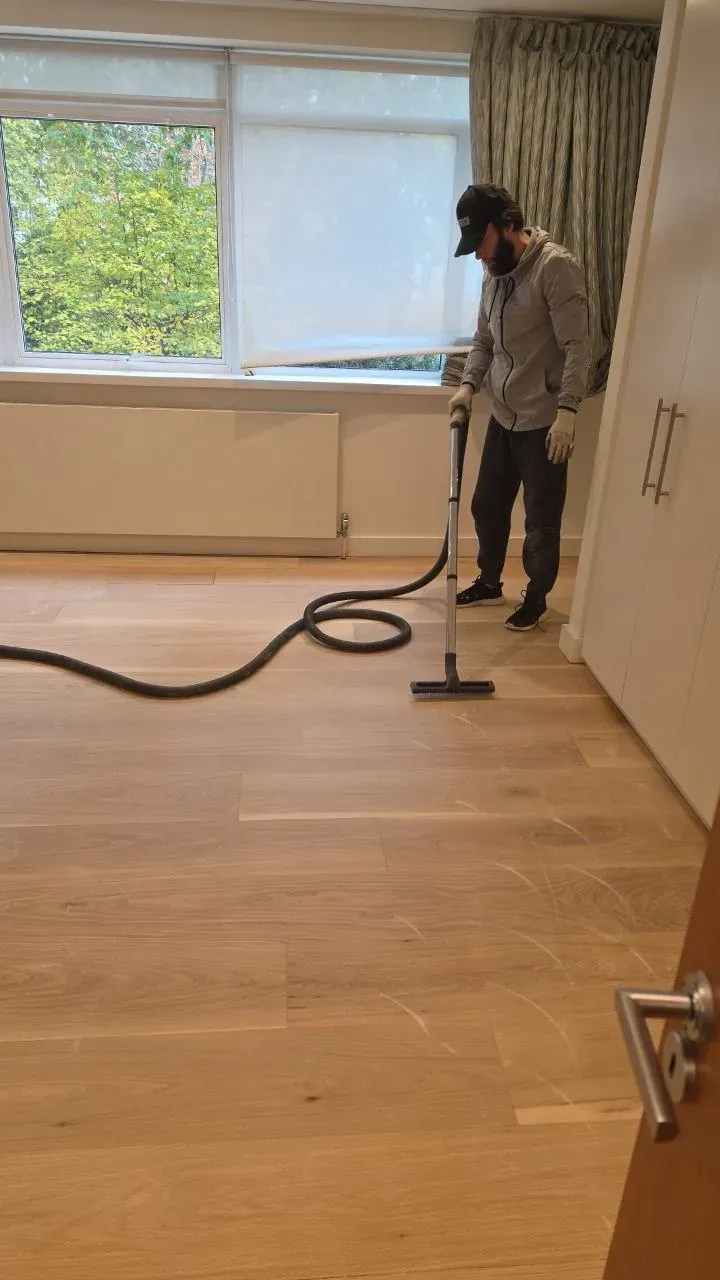
Common mistakes after finishing
- Returning rugs because the surface feels dry. Covering permission may come later.
- Booking movers before the finish is selected. Their arrival must suit the agreed product and programme.
- Trying to accelerate drying with aggressive heating. Maintain the conditions specified for the coating instead.
- Allowing decorators to tape protection to the new finish. Adhesive and coverings need specific approval.
- Cleaning too soon. Use the manufacturer's timing and compatible products.
Tell the contractor if the room is unusually cold, humid or poorly ventilated. A published drying figure is conditional, not a substitute for checking the actual surface.
Frequently asked questions
Can floor sanding be finished in one day?
Some work programmes may be short, but a one-day attendance does not establish when furniture, rugs and normal use can return. Confirm the entire sequence after the floor and finish have been assessed.
Can I stay at home during the work?
That depends on access, the rooms involved and the working arrangements. A hallway or staircase can make occupied work impractical even if another room is available. Agree this before booking.
Does an extra coat change the handover date?
It can. Another application introduces its own preparation and drying requirements. The final-coat time also affects the subsequent return-to-use instructions.
Plan the work around how you use your home
For professional floor sanding in London, send the approximate area, floor type, photographs and your preferred dates. Mention access constraints and any furniture that must remain.
Use the wood flooring prices page as a guide to the services, then request a quotation specifying repairs, sanding and the selected finish. A useful programme makes both the work and the return to everyday use clear.