Deep Scratches in Wooden Floors: Repair, Sand or Replace?
Not every deep scratch means sanding the whole room. Learn how to judge the depth, the finish and the floor type before choosing a repair.
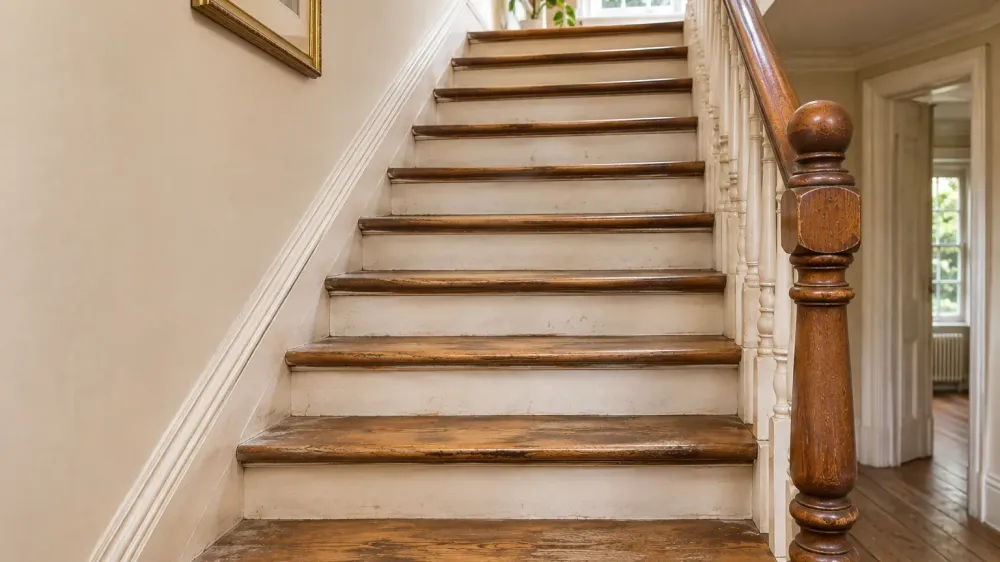
A wooden staircase can usually be sanded and refinished if the treads are sound, there is enough timber left and any old paint can be removed safely. What makes stairs different from a floor is not the timber but the shape: every step has a tread, a riser, a nosing and two ends against the string, and most of that surface has to be worked by hand or with small machines. Before deciding on a finish, it is worth checking the structure, the coatings and how the household will move around while the stairs are out of use.
Illustrative images in this guide include AI-generated scenes, not documented S Wood Floor project photographs.
On an open floor, a large sanding machine does most of the work and the edges are a small proportion of the area. On a staircase the proportions are reversed. A typical straight flight has a dozen or more treads, each with internal corners, a rounded or square nosing and an end grain where the tread meets the wall string. Risers are vertical, so they are sanded with handheld tools, and any moulding under the nosing has to be cleaned out by hand.
That has three practical consequences:
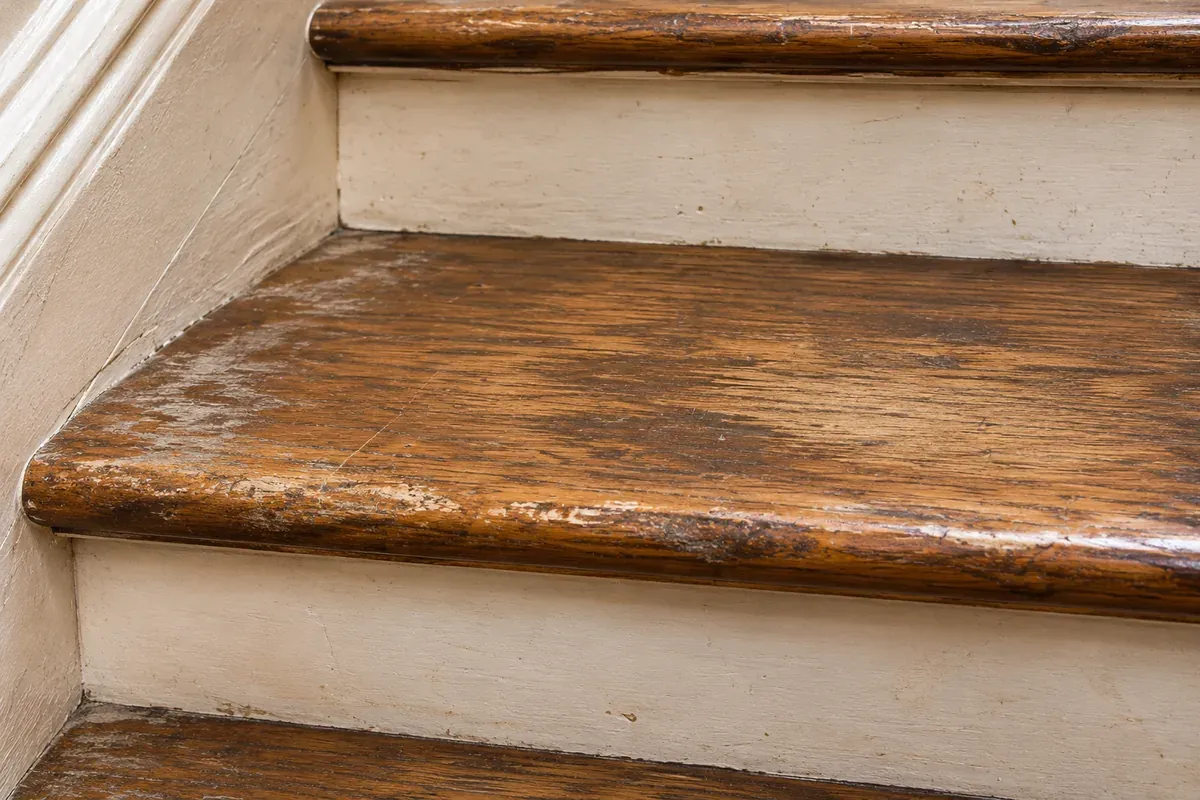
Illustrative AI-generated image.
Sanding improves the surface; it does not fix a staircase that moves. Walk up and down slowly and look and listen for:
A creak alone is not necessarily serious, but movement should be dealt with before sanding. If a tread is fixed down after it has been sanded, the joint lines can open again and the new finish may crack along them. Where the flight shows signs of structural failure, such as a string pulling away from the wall or a handrail that is no longer secure, it needs a joiner's assessment rather than a refinishing quote.
Many period staircases have painted risers, painted strings or a painted border either side of an old stair runner. Some have been fully painted at some point. In a property of that age, existing paint layers may contain lead. HSE guidance on lead says that properties built before the 1980s may have lead paint, and that dry sanding old paint and using blowlamps or gas torches should be avoided. It points instead to methods such as chemical paint stripper, wet abrasive paper and on-tool extraction.
In practice that means:
Stair runners can also leave rows of tack holes, gripper strips and dark bands where the timber either side was stained or varnished. These marks often survive sanding to some degree, so decide early whether you want them to show.
Restoring a staircase is as much a design decision as a technical one. Common choices include:
| Option | What it involves | Points to consider |
|---|---|---|
| Natural treads and risers | All visible timber sanded and finished clear | Shows every repair, species change and tack hole; works best when the timber is consistent |
| Natural treads, painted risers and strings | Treads sanded and finished; risers and strings repainted | A traditional look that hides patched or mismatched risers; paint and clear finish need neat lines |
| Natural treads with a runner | Only the exposed edges are finished; a new runner covers the centre | Reduces wear on the treads; the runner fixing method should suit the finish |
| Fully painted | Surfaces prepared and repainted | Useful where the timber is poor or heavily patched; needs a floor-grade paint suited to stairs |
Handrails, balusters and newel posts are separate surfaces with their own coatings. They are often not included in a stair-sanding quote unless you ask, so say clearly whether they are part of the job.
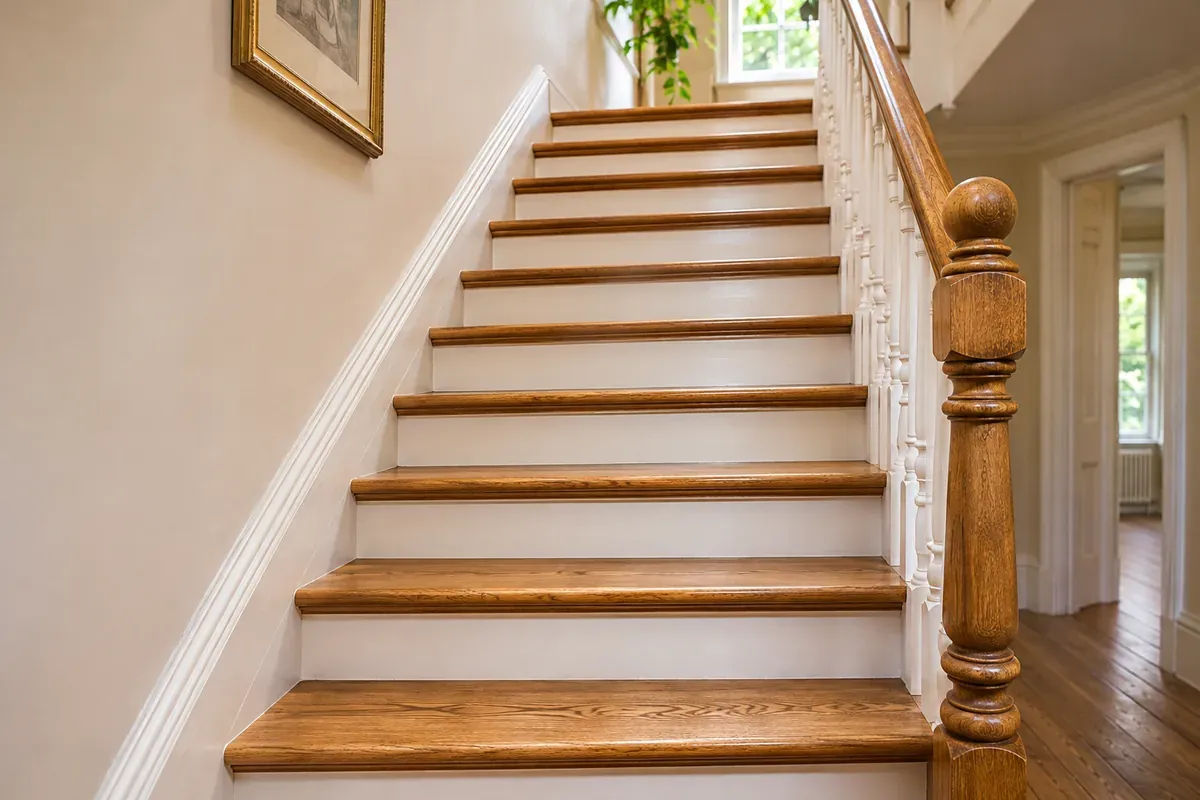
Illustrative AI-generated image.
Stairs take concentrated wear on the front of each tread, and a slippery finish on a staircase is a real safety concern. When discussing lacquer, oil or hardwax oil, ask about:
For a broader comparison of the two main finish types, see our guide to oil or lacquer after sanding.
Drying and curing times depend on the product, the number of coats and the temperature and humidity in the house. The product's technical data sheet sets the times for light foot traffic, normal use and covering the surface; ask which product will be used and keep a copy of those instructions.
Practical ways to keep the house usable include:
Before agreeing to the work, it helps to have the following in writing:
Not always. Paint can hide replacement treads in a different species, filler and patched nosings, and pigment often stays in the grain and corners. A small, safely prepared test area is usually the only reliable way to see what is underneath.
Usually not. Most of the work on stairs is hand detailing, so the number and design of the steps, any paint removal and repairs matter more than the floor area. Ask for a written quotation that lists each element.
Often they can, and doing them together can help match the colour and finish. The landing is usually treated as part of the floor; the flight itself is planned separately because of access.
S Wood Floor assesses timber stairs and landings alongside floors in London homes; stairs are quoted separately because their labour does not follow a simple area calculation. If you are considering restoring a staircase, send a photograph of the whole flight, a close-up of a typical tread and nosing, and a note about any paint. You can read more about our wood floor sanding service or contact us to arrange an assessment.