Deep Scratches in Wooden Floors: Repair, Sand or Replace?
Not every deep scratch means sanding the whole room. Learn how to judge the depth, the finish and the floor type before choosing a repair.
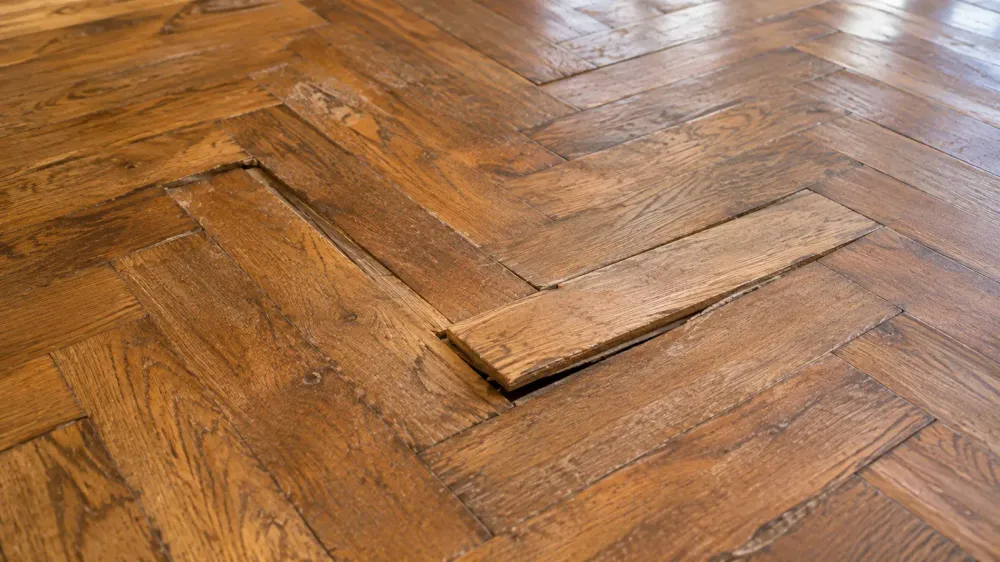
Loose parquet blocks should be re-fixed before a floor is sanded, never sanded over. A block that rocks will be cut unevenly by the machine, the finish will crack along its edges and the problem will return. Whether the blocks can simply be re-laid, or whether a wider area needs work, depends on why they came loose: tired adhesive, movement in the subfloor or moisture. Finding that cause is the first job.
Illustrative images in this guide include AI-generated scenes, not documented S Wood Floor project photographs.
Traditional solid block parquet is bonded directly to the subfloor, usually a concrete or screed base in older buildings and sometimes timber boards or plywood. Blocks lift when that bond fails. The common reasons are:
A simple survey tells you a lot. Walk the floor in socks and tap it with the handle of a screwdriver:
Mark loose blocks with masking tape and stand back. Are they scattered, or concentrated in one area? Clusters along an external wall, beside a kitchen or bathroom, at a doorway or around an old hearth point to a local cause. Loose blocks spread randomly across the whole floor suggest the adhesive is failing more generally.
Also note any dark staining, a musty smell or blocks that feel damp. Moisture problems must be traced and resolved before any re-fixing or refinishing, otherwise the repair will fail.
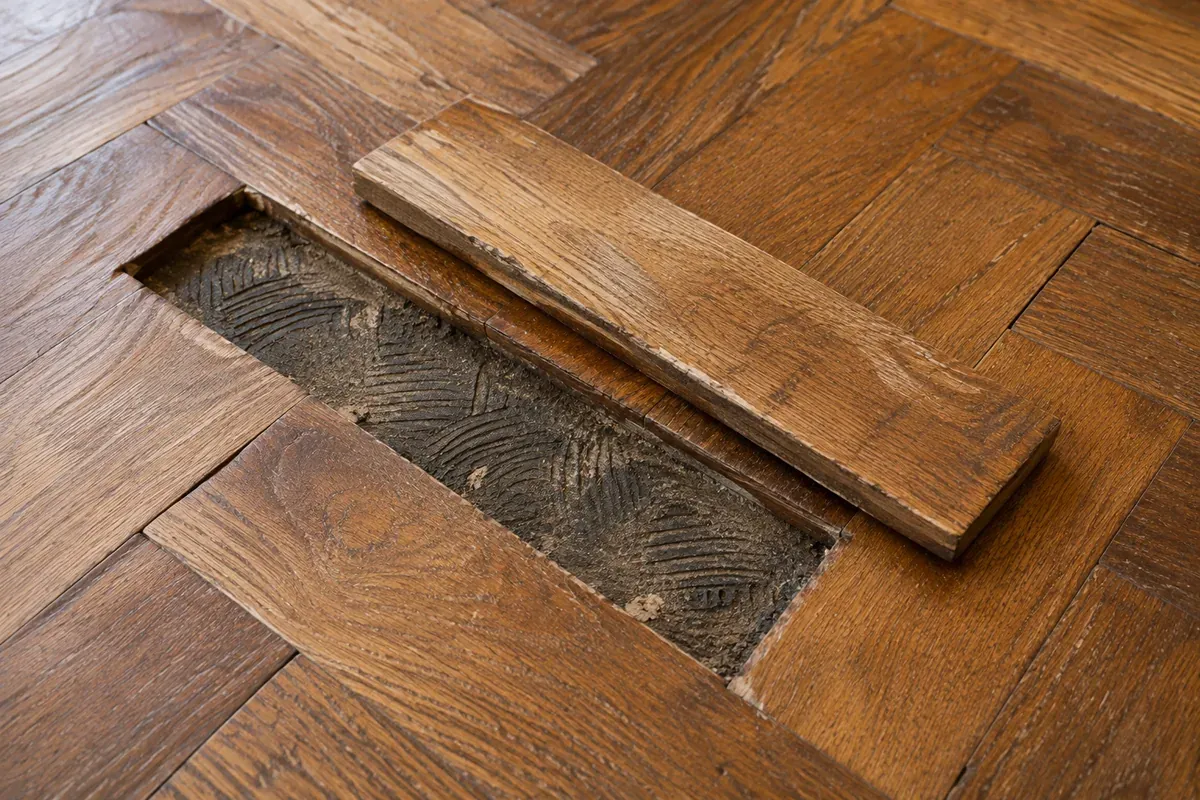
Illustrative AI-generated image.
Older parquet floors in the UK were commonly laid on bitumen, which shows as a black, tar-like layer under the blocks. HSE lists asbestos bitumen adhesive among the floor materials that may contain asbestos, in the context of floor tiles, and notes that asbestos can be found in any building built or refurbished before 2000. It is not possible to tell by eye whether a particular adhesive contains asbestos.
So, before old black adhesive is scraped, ground or sanded:
Where a loose block lifts cleanly and the adhesive is intact and not being disturbed, it may be possible to re-bed it without removing the old bed. That decision belongs to whoever assesses the floor on site.
| Situation | Likely approach | Points to check |
|---|---|---|
| A few scattered loose blocks, sound subfloor, dry | Clean and re-bond the original blocks | Adhesive compatible with the substrate and any residue; blocks still flat and complete |
| Blocks broken, split or badly warped | Replace with matching reclaimed or new blocks | Thickness, width, species and colour; reclaimed blocks may need cutting to size |
| A cluster of loose blocks around a wet area | Find and fix the moisture source, allow drying, then re-fix | Moisture readings compared with dry areas of the same floor |
| Widespread loose blocks and hollow sounds | Consider lifting and re-laying larger areas | Condition of the subfloor; whether original blocks can be cleaned and reused |
| Cracked or uneven subfloor | Repair the base before refitting blocks | Screed or board repairs must be complete and dry |
Original blocks are usually the best match for colour, grain and patina, so reusing them where possible is worth the extra effort of cleaning old adhesive from their undersides. Missing blocks can be replaced with reclaimed timber of the same species, but expect a difference in colour until the whole floor is sanded and finished together, and sometimes after.
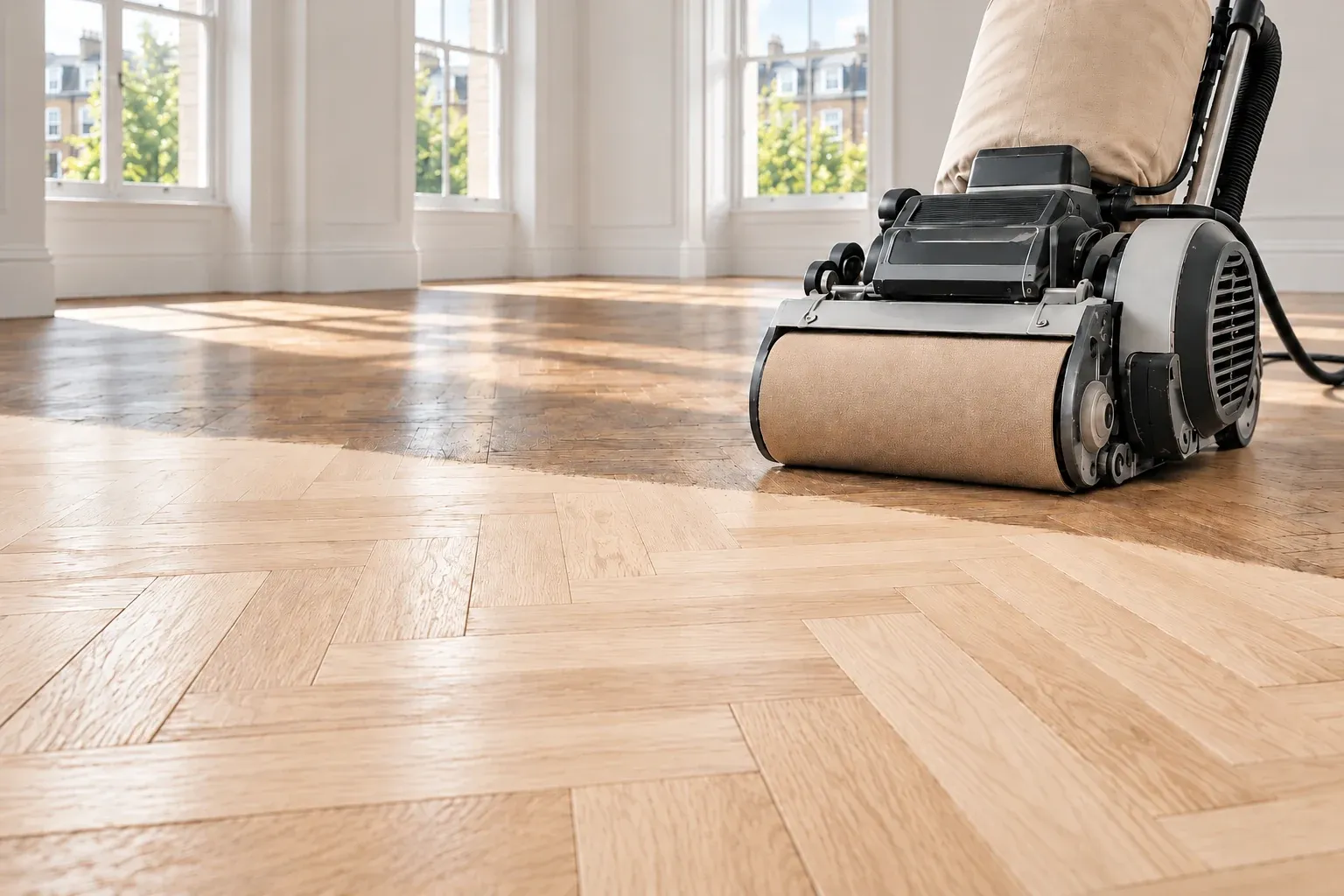
Sanding should wait until:
Herringbone and other patterned floors change grain direction with every block, so they are usually sanded at an angle to the pattern and finished with a fine abrasion to avoid visible cross-grain scratches. Gaps between blocks can then be assessed; fine joints are often filled with a resin mixed with dust from the same floor, while larger ones may suggest the blocks have shrunk or moved. Our article on restoring old parquet: when to sand and when to replace covers the wider decision for worn or damaged block floors.
For a single block over a dry, sound base, a careful repair is possible, but use an adhesive suitable for wood flooring and the substrate. Do not scrape black bitumen adhesive without knowing whether it contains asbestos, and do not glue down blocks over a damp area.
No. Many loose blocks are entirely sound and can be cleaned and re-bonded. Replacement is usually only needed for blocks that are split, rotten, badly distorted or missing.
The bond beneath them has failed, but the surrounding blocks are holding them in place. Hollow areas often spread, so it is sensible to have them assessed before sanding.
S Wood Floor's parquet floor restoration service covers re-fixing loose blocks, replacing damaged ones and sanding and refinishing once the floor is stable. If you have loose blocks, mark them with tape and send us photographs of the whole room and a close-up of any lifted area, with a note of when you first noticed the problem.