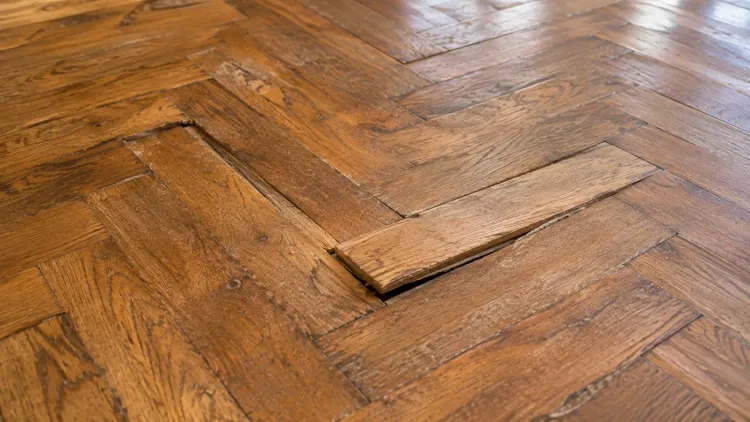
Loose Parquet Blocks: Repair Before Sanding or Replace?
A few loose parquet blocks can be a minor repair or a sign of moisture or adhesive failure. Find out what to check before anything is glued or sanded.
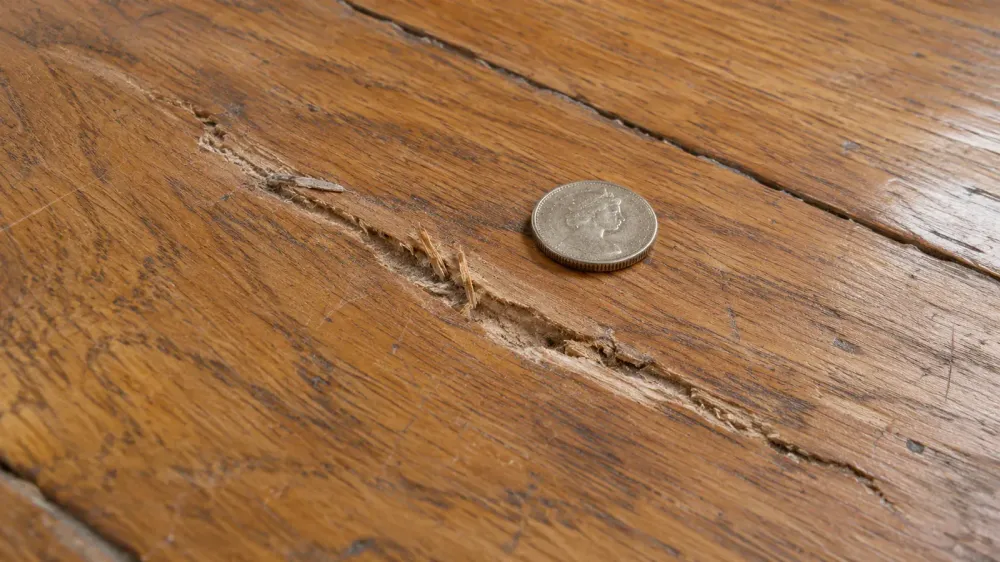
A deep scratch does not automatically mean the whole floor has to be sanded. The right repair depends on three things: whether the damage is in the finish or in the wood, whether it is a single mark or part of general wear, and how much sandable timber the floor has. A scratch in the lacquer can sometimes be blended locally; a gouge into the timber needs filling, sanding or a replacement section; and on engineered boards the thickness of the top layer can decide the matter.
Illustrative images in this guide include AI-generated scenes, not documented S Wood Floor project photographs.
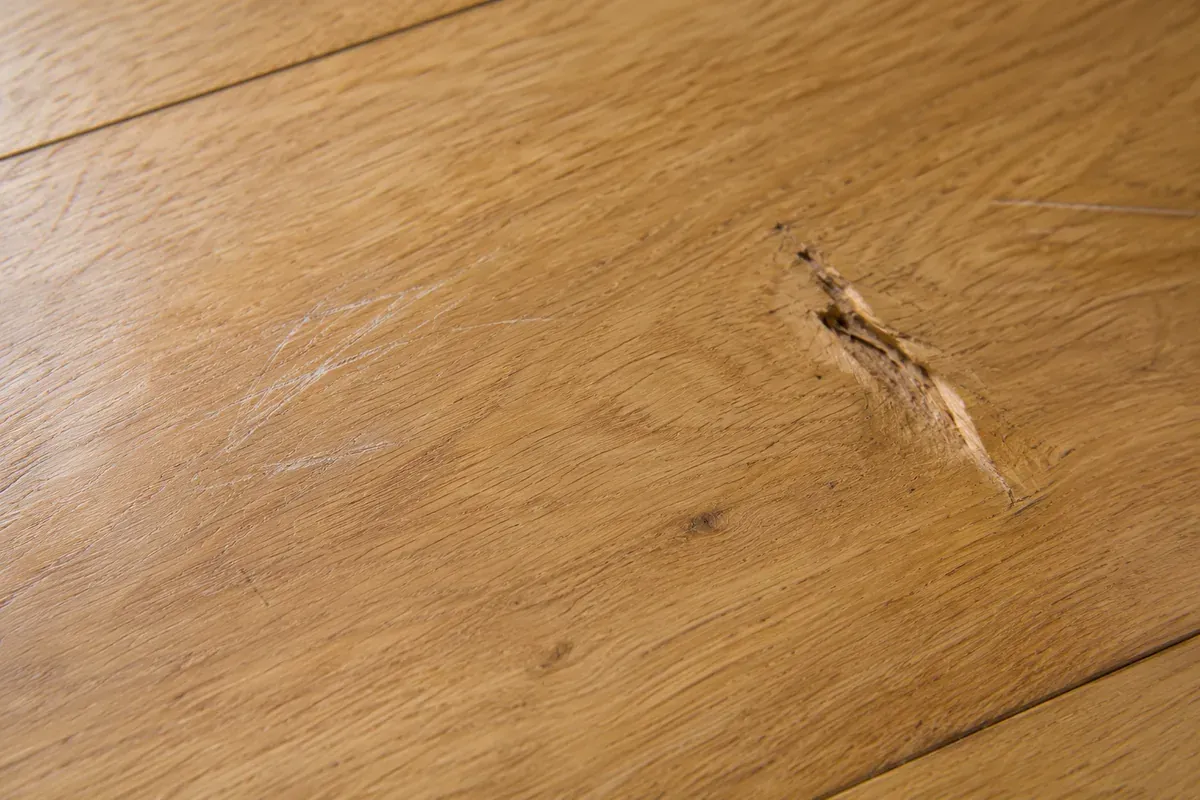
Illustrative AI-generated image.
Start by looking at the mark in daylight at a low angle, then run a fingernail across it.
Note whether the damage is a single line (a dropped tool, a dragged appliance) or one of many scratches across a traffic route. Isolated marks lend themselves to local repairs; widespread wear usually points towards refinishing a larger area.
The construction of the floor sets the limits of what can be done:
| Route | Suits | Advantages | Limitations |
|---|---|---|---|
| Local repair: fill, touch in, recoat | Isolated scratches and small gouges in a sound floor | Least invasive; keeps original finish elsewhere | Hard to make invisible; sheen and colour may differ from the surrounding area |
| Sand and refinish the room | Widespread scratches, worn finish, or a local repair that would stand out | Even appearance across the floor | Removes timber; furniture must be moved; drying time before use |
| Replace damaged boards or blocks | Deep gouges, splits, burn marks or boards too thin to sand | Removes damage completely | New timber rarely matches immediately; needs careful sourcing and finishing |
On an oiled floor, local repairs are often more successful because oil finishes can be worked into a small area and blended. On a lacquered floor, the film finish makes a patch more likely to show at its edges, and a scratch-only repair may mean recoating a whole board or a whole room to get even sheen. Our guide to recoating a floor without sanding covers when a recoat is enough.
Filler is useful for small, stable defects, but it has limits. A filled gouge will usually remain visible to some degree because filler does not have grain and takes finishes differently from the surrounding wood. Coloured wax sticks and hard wax repairs can disguise a mark on some finishes; resin fillers mixed with dust from the same floor are often used during sanding. For larger damage, a timber insert or a replacement board usually looks better than a large area of filler.
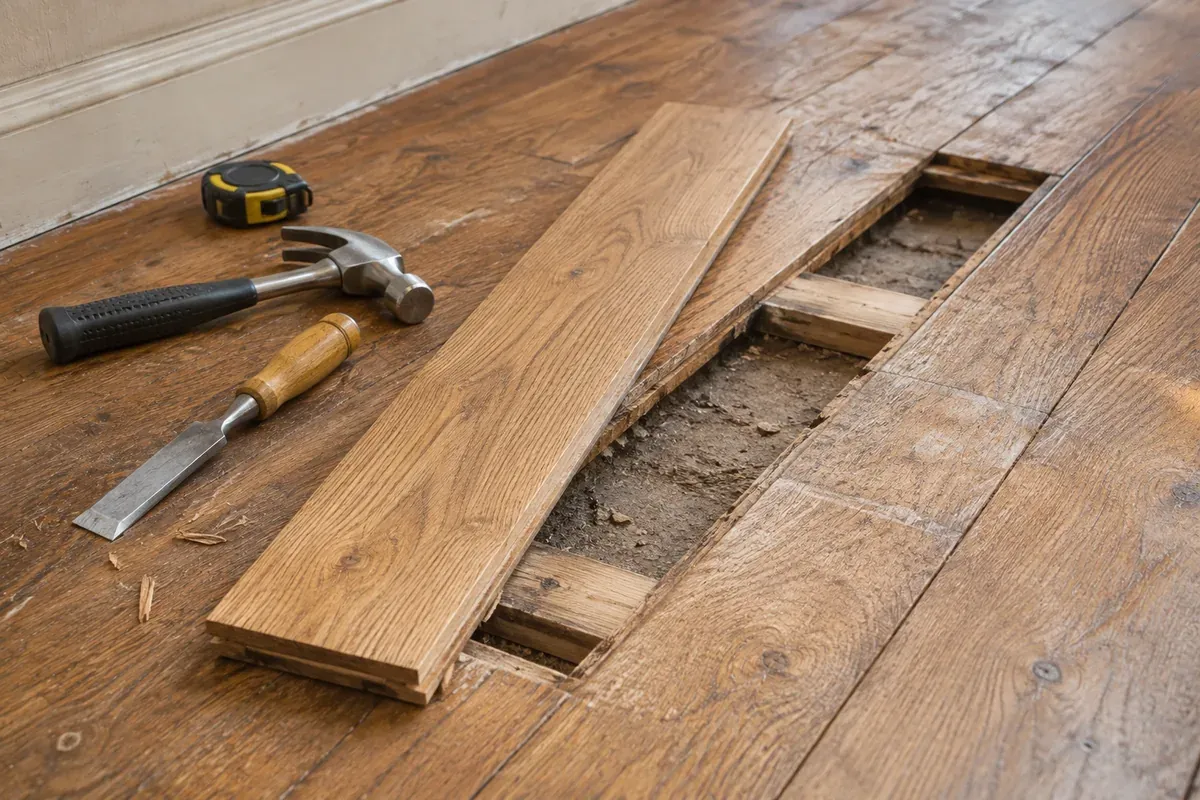
Illustrative AI-generated image.
Replacement is worth considering when:
Matching a replacement board to an existing floor takes care. Species, grade, width, thickness, age and existing finish all affect how well it blends. Where colour needs adjusting after a repair, floor staining can sometimes narrow the difference, but it should be tested on the actual timber first.
A repair lasts longer if the cause is dealt with:
No. Polishing and maintenance products can reduce the appearance of light marks in a finish, but they cannot remove a groove in the timber. That needs filling, sanding or replacement.
Not always straight away. Timber colour changes with age and light exposure, so a new board may look lighter or darker until it has aged, even when the species is correct. Sanding and finishing the surrounding area at the same time helps.
Usually only if the rest of the floor is also worn, or if the scratch is in such a prominent place that a local repair would stand out more than a full refinish.
S Wood Floor carries out wood floor repairs on solid, parquet and suitable engineered floors. To get a useful first opinion, send one photograph of the whole room and a close-up of the scratch with a coin beside it for scale, taken in natural light. If you suspect the floor is more widely damaged, our article on whether a damaged floor can still be sanded is a good next read.