Can Wood Floors Be Recoated Without Sanding?
An intact wooden floor finish may be recoated without full sanding. Preparation, compatibility and adhesion still matter.
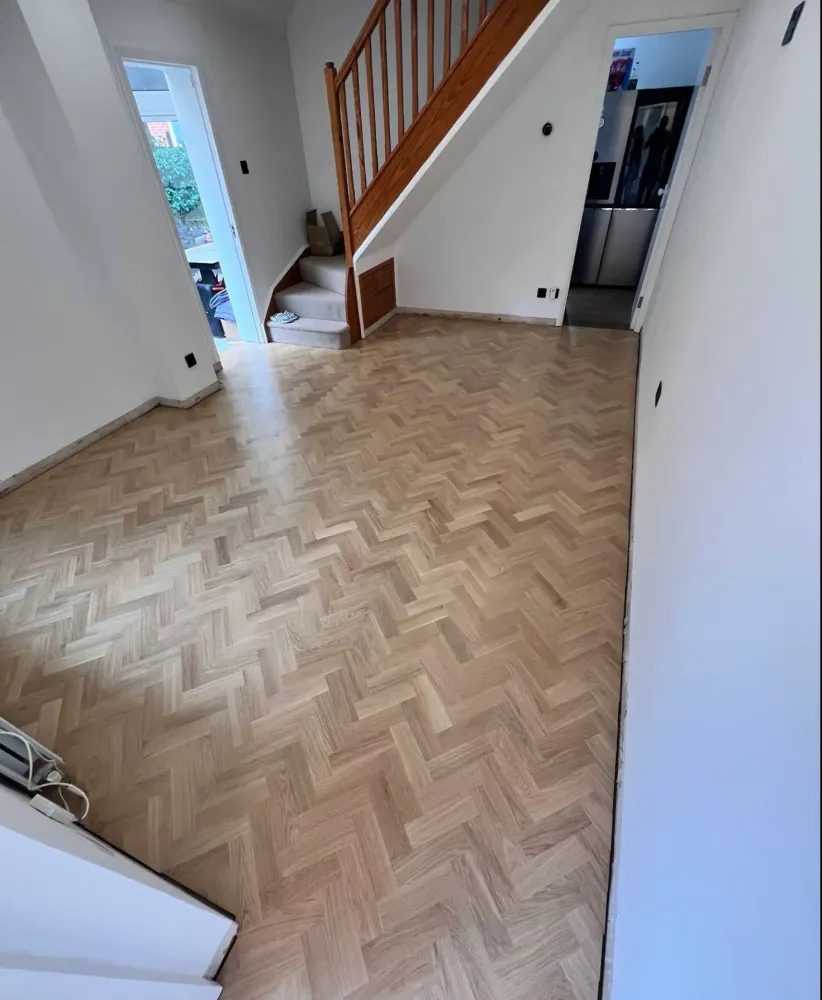
Many engineered wood floors can be sanded and refinished, but not every one, and not always more than once. The deciding factor is how much real hardwood is left above the core of each board, not the word "engineered" on the original packaging. Previous sanding, bevelled edges, a textured surface, the way the floor is fixed and whether it is flat all affect whether a machine sand is safe. Checking these points first is what separates a successful refinish from a floor that has been sanded through to its core.
An engineered board has a top layer of real hardwood, often called the wear layer or lamella, bonded to a supporting core. The core is usually plywood, softwood strips or high-density fibreboard, arranged to make the board more dimensionally stable than solid timber.
Only the top layer can be sanded. Once the sander cuts through it, the core is exposed, and no finish will make that area look like wood again. This is why the total thickness of a board (for example, 14 mm or 20 mm) tells you very little on its own. Two boards of the same overall thickness can have very different amounts of sandable hardwood.
If you are still unsure whether your floor is solid or engineered, our guide to engineered versus solid wood flooring explains the construction differences. For a broader view of long-term wear, see how long solid and engineered floors can last.
The wear layer figure in a product specification describes the board when it was new. What matters now is the hardwood that remains above the tongue, the joint or the core, after years of use and any earlier refinishing.
Useful places to look include:
For context, the National Wood Flooring Association's voluntary refinishability programme specifies a minimum 2.5 mm wear layer for factory-finished products, or 3.2 mm for unfinished products. Textured boards are assessed at their thinnest point. These are criteria for a particular certification programme, not a UK legal standard or an automatic guarantee that an installed floor can be sanded. A floor may require more usable timber because of previous sanding, unevenness or damage. The manufacturer's instructions and the actual remaining hardwood must be checked. On some engineered products, measuring down to the tongue can overstate the usable wear layer.
A floor that has already been refinished has less timber to give. Look for:
If the floor was in the property when you bought it, you may not know its history. That is a reason to assess more carefully, not to assume there is plenty left.
Most factory-finished engineered floors have bevelled edges. Sanding the surface flat changes the profile of those bevels, and a micro-bevel can be removed altogether. Old finish and dirt trapped in the bevels may also need detailed hand work.
Brushed, hand-scraped or otherwise textured boards are harder still. Sanding them flat removes the texture, and the wear layer may already be thinner in the low points of the pattern. For these floors, a sympathetic maintenance treatment or recoat is often more realistic than a full sand.
How securely the floor is installed matters. A firmly fixed floor may be easier to sand consistently than a floating click-floor installation, where boards and joints can move under load. Neither fixing method makes a floor automatically suitable or unsuitable; assess the manufacturer's instructions, the wear layer and the condition of the installation. Before any sanding, check for:
Cupped boards should not be sanded until the cause of the moisture has been found and the floor has stabilised. Sanding a cupped floor flat while it is still damp can leave it thin at the board edges once it dries and settles.
A sander works from the high points of a floor. Where boards sit at slightly different heights, more timber is removed from the high spots to level the surface. On a thin wear layer, that extra removal is exactly where break-through happens. An uneven floor may still be refinishable, but the approach has to be lighter and more selective.
Many engineered floors leave the factory with a very hard, abrasion-resistant coating. Removing it takes care and a suitable abrasive sequence, ideally starting with the finest grit that will cut the coating rather than an aggressive coarse grit that also removes timber.
If the wear layer is breached, the exposed core shows as a pale, fibrous or layered patch that does not take the finish like hardwood. It cannot be sanded out or disguised with lacquer. The usual remedy is to replace the affected boards, which raises questions of matching the species, colour and finish of the rest of the floor, and of whether replacement boards are still available.
For this reason, a cautious approach on a marginal engineered floor is not timidity; it protects the floor's remaining life.
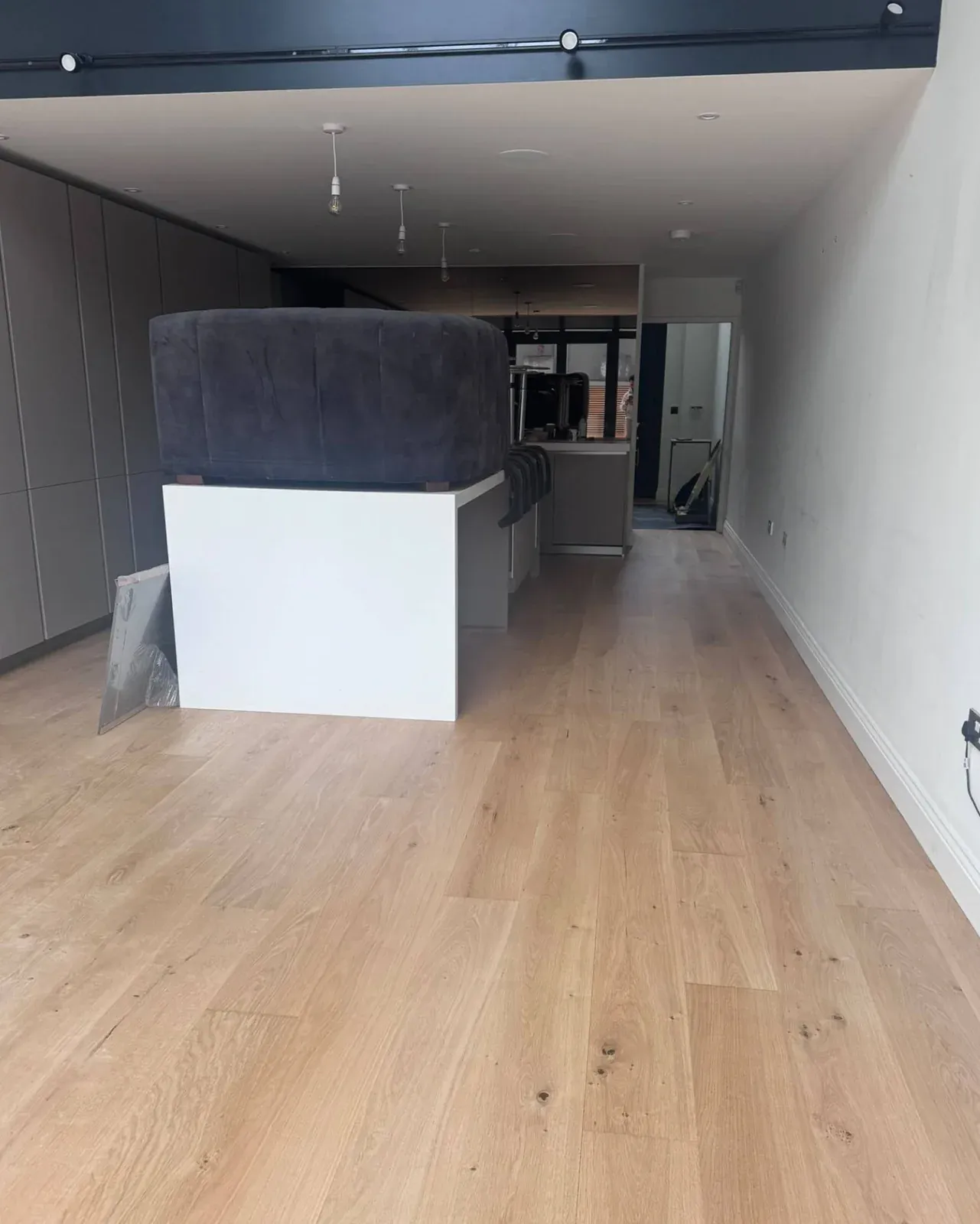
A full sand is not the only option, and it is often not the first one to consider. Depending on the condition of the surface:
Our wood floor maintenance service covers suitable cleaning and protective treatments, and wood floor repairs cover damaged or loose boards.
A full sand is more likely to be justified where there are widespread scratches into the timber, worn traffic lanes through to bare wood, or a wish to change the colour of the floor, and where the boards have enough wear layer to allow it.
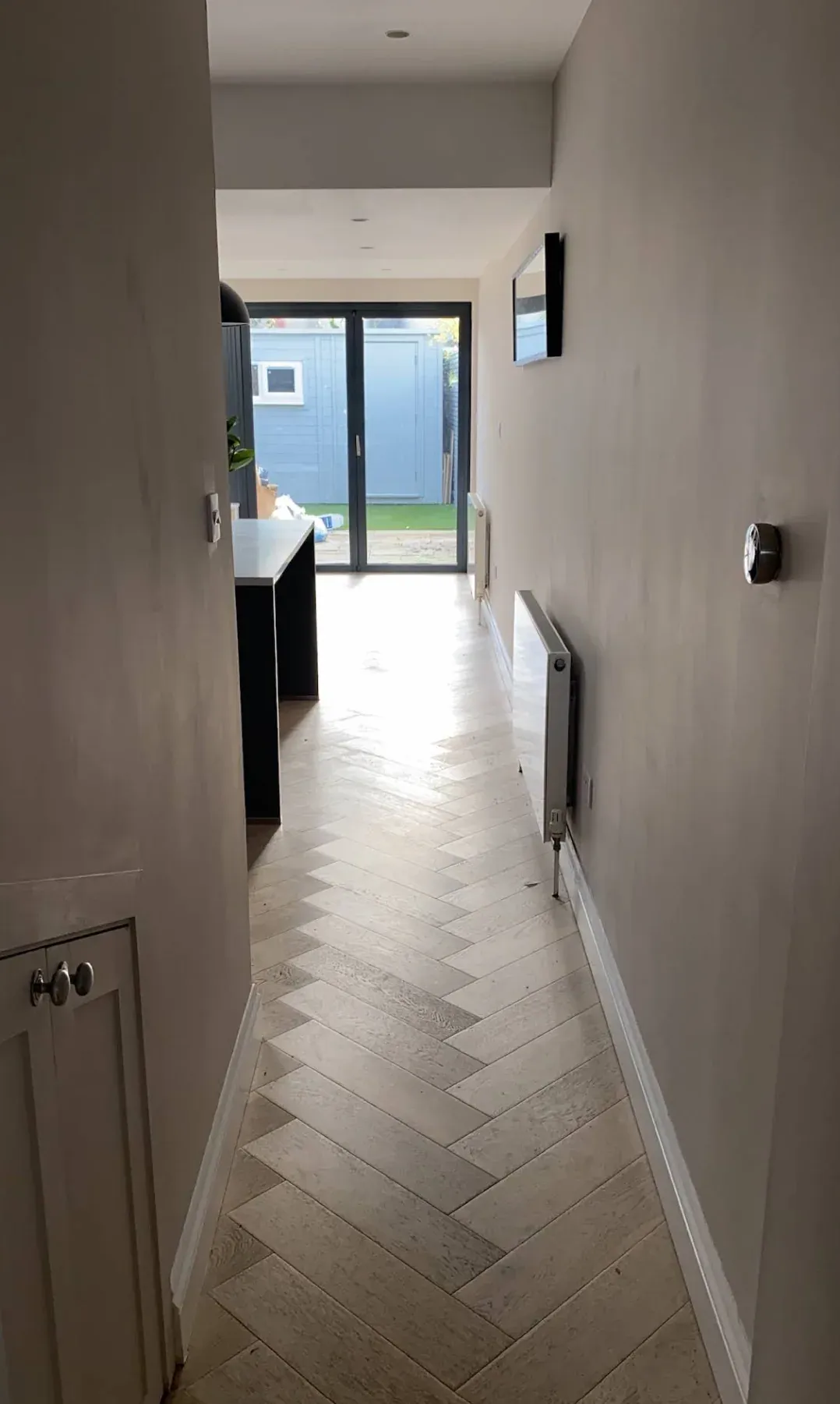
Photographs help with an initial conversation, but they rarely show wear layer thickness, hidden moisture or how firmly a floor is fixed. An assessment should confirm:
If your engineered floor looks tired and you are not sure how much timber is left, the safest first step is a careful look before any machine touches it. S Wood Floor can assess suitable engineered, solid and parquet floors across London and explain whether sanding is appropriate or whether a less invasive option would serve the floor better. Find out more about our wood floor sanding service or request a quotation with photographs, the approximate area and your postcode. If the floor is suitable for sanding, our guide to floor sanding preparation and drying times will help you plan the work.
There is no fixed number. It depends on the usable wear layer, how much timber each previous sanding removed, how flat the floor is and how much damage needs removing. Some products may allow more than one careful refinish, whereas others should not be machine sanded at all.
Sometimes, but floating click floors are more challenging because boards can move under the machine and joints can open. The wear layer, stability and manufacturer's guidance need to be checked first.
Often you can, from the product specification, spare boards, or an exposed board end at a threshold. Where none of these is available, an on-site assessment may be needed.
Sanding changes the bevel profile, and shallow micro-bevels may disappear. This should be discussed before work starts so the finished appearance is not a surprise.
In some cases, yes. A sound, compatible finish may be cleaned, prepared and recoated, and oiled floors may accept a maintenance oil. Bare timber, deep scratches or a colour change usually need sanding.