Matching the Colour of a Repaired Wooden Floor
New timber in an old floor nearly always looks different at first. What affects the colour match, and how sanding, staining and finish choice can narrow the gap.
In most renovations, floor sanding and finishing should be one of the last jobs, after the wet trades, plastering, electrical and plumbing work and most of the painting, but before final decoration touch-ups and moving furniture in. Sanding too early leaves a new finish exposed to dropped tools, plaster, paint and heavy boots. Sanding too late can delay moving in or force decorators to work around a curing floor. A simple plan that puts floor work in the right place avoids both.
Every project is different, but a common sequence looks like this:
The main principle is simple: messy and wet work first, the floor finish near the end.
Plaster, screed and concrete release large amounts of moisture as they dry. A wooden floor in a damp building can take up moisture, swell and cup. If it is sanded and finished in that state, problems can appear later as it dries: gaps, crowning and cracks in the finish. Allow the building to dry out and the heating to run normally for a while before floor sanding, and ask the contractor to check moisture readings if there is any doubt.
It helps to split floor work into two stages:
Telling all trades in advance that the floor will be sanded later is useful: it reminds electricians and plumbers to relay boards carefully and to avoid unnecessary damage.
Two questions come up often:
Should skirting go on before or after sanding? In most cases skirting can be fitted before sanding. Edge sanders work up to the skirting, and any small scuffs can be touched in afterwards. If skirting is being fitted or replaced, ask the floor contractor for their preference.
Should walls be painted before or after? Main painting is normally done before sanding, because drips and spills on a new floor finish are hard to remove. Final coats on skirting and touch-ups to walls can be done afterwards, with the floor protected and the finish cured enough to be covered. Sanding dust can mark freshly painted surfaces, so it is worth keeping the last decorative coat until after sanding where possible.
Once the floor is finished:
Protection laid too early, or held down with tape, can mark or lift a new finish.
Floor finishing takes several days from the start of sanding to the point where furniture can return, and longer before rugs go down. Our guide to how long floor sanding takes explains the stages. Building a few days of slack between floor finishing and the move-in date avoids rushing furniture onto a floor that is not ready.
If you are renovating a rental property between tenancies, our checklist for wood floor restoration between tenancies covers the landlord-specific points.
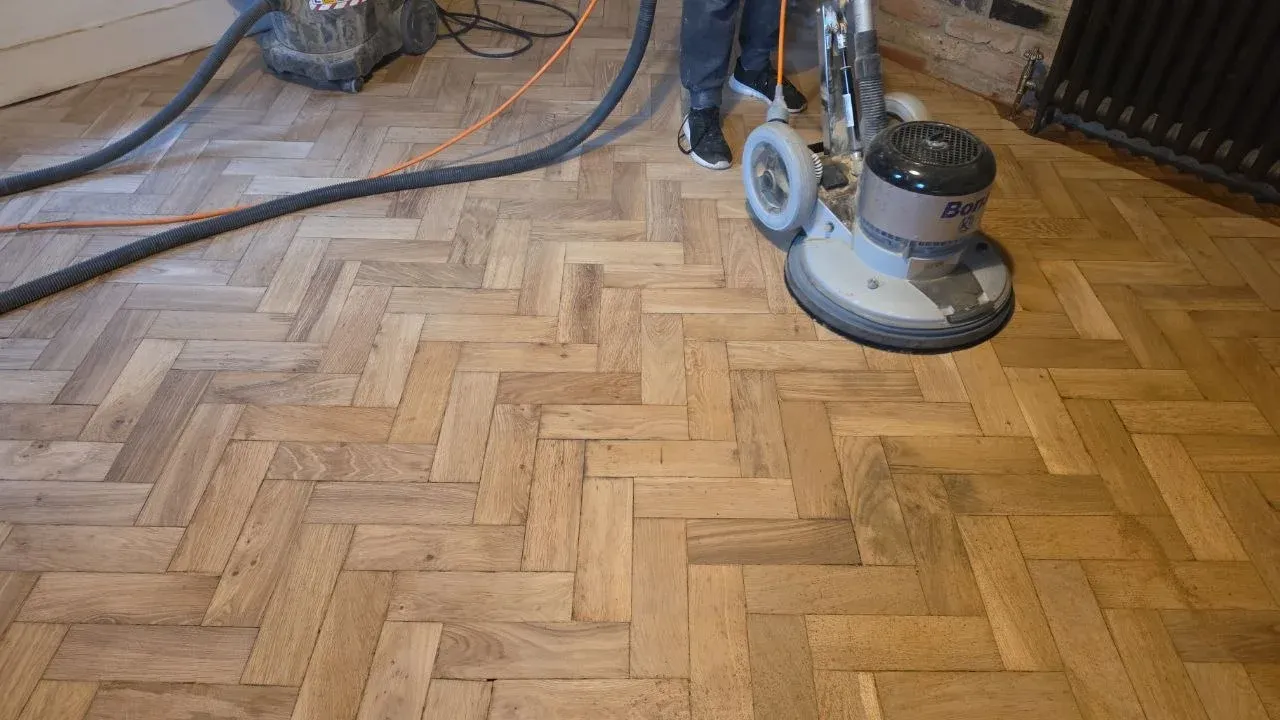
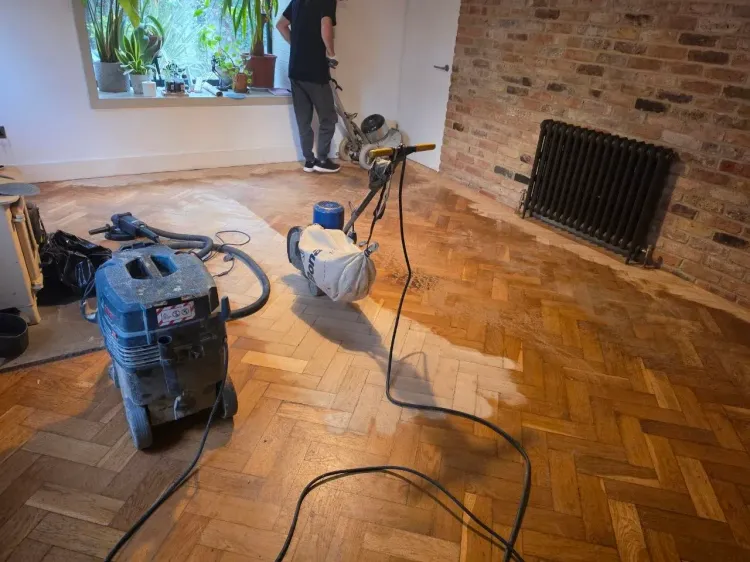
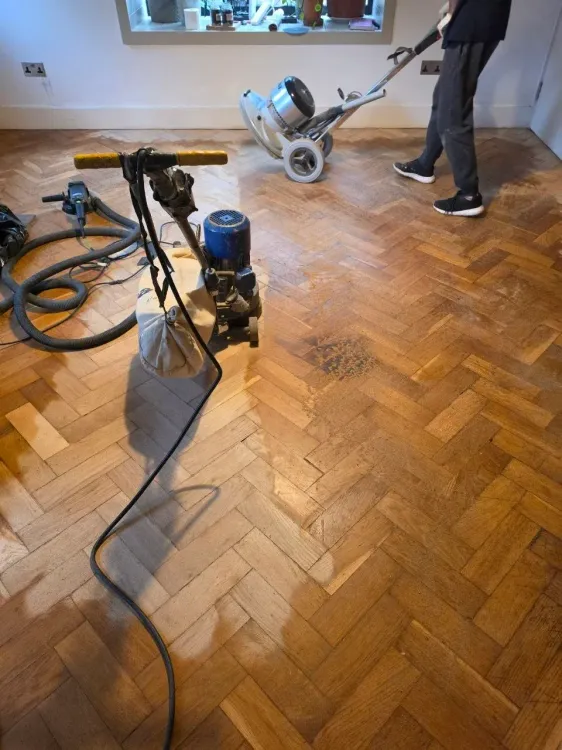
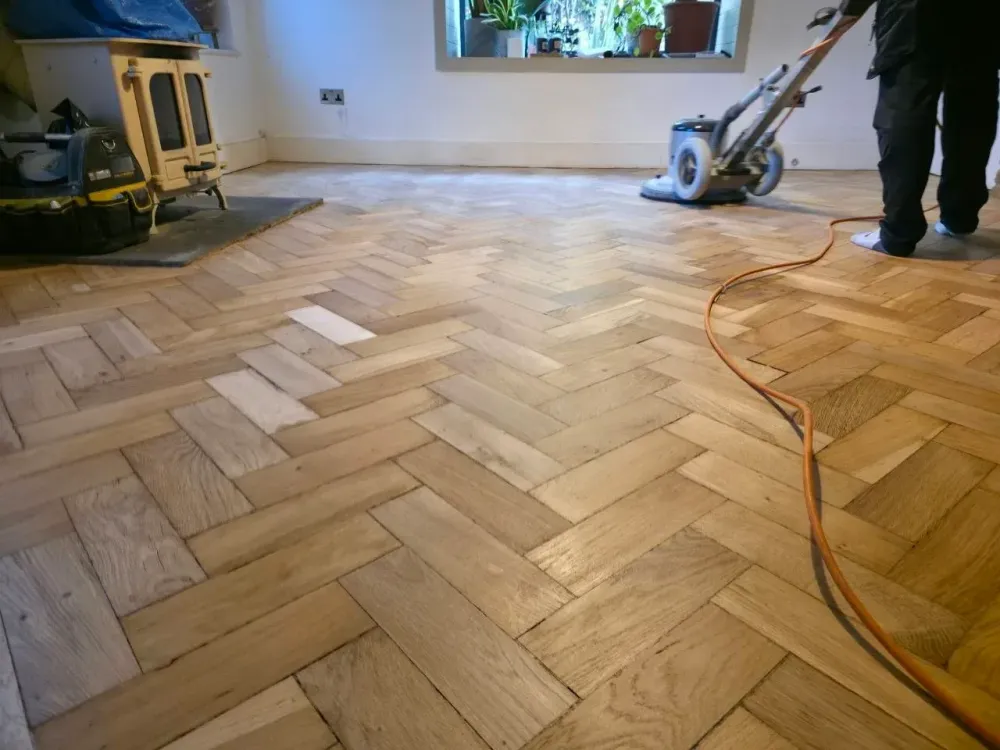
A sanding machine working on a cleared parquet floor.
Usually after the main painting and before final touch-ups. That avoids paint drips on the new finish and dust on fresh paint.
It is best done when the house is quiet. Other trades walking through, drilling and making dust can damage the finish and get into wet coatings.
Until the plaster and any new screed have dried and the house has been heated normally for a while. Moisture readings are more reliable than a fixed number of days.
When planning your renovation budget, consult our wood flooring guide prices to understand how sanding, repairs and finishing are priced.
S Wood Floor can discuss timing with you or your main contractor, including any floor repairs that are best done earlier in the project. See our floor sanding and wood floor repair service pages, or contact us with your renovation timetable.