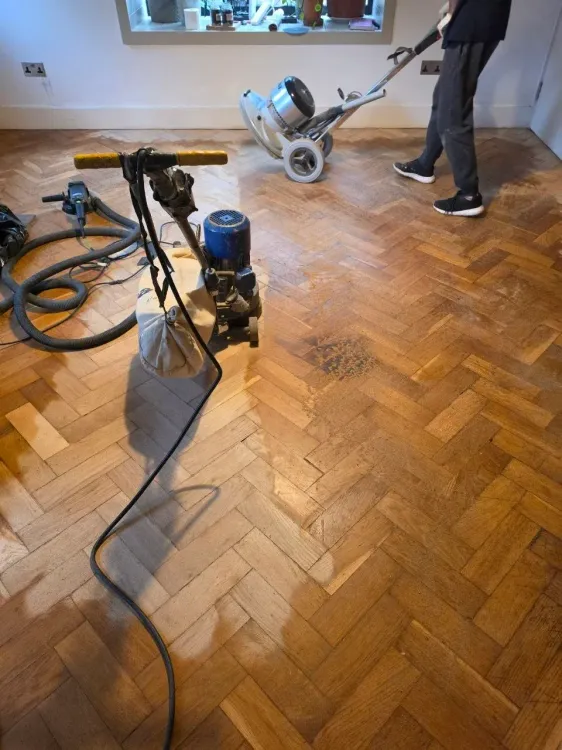
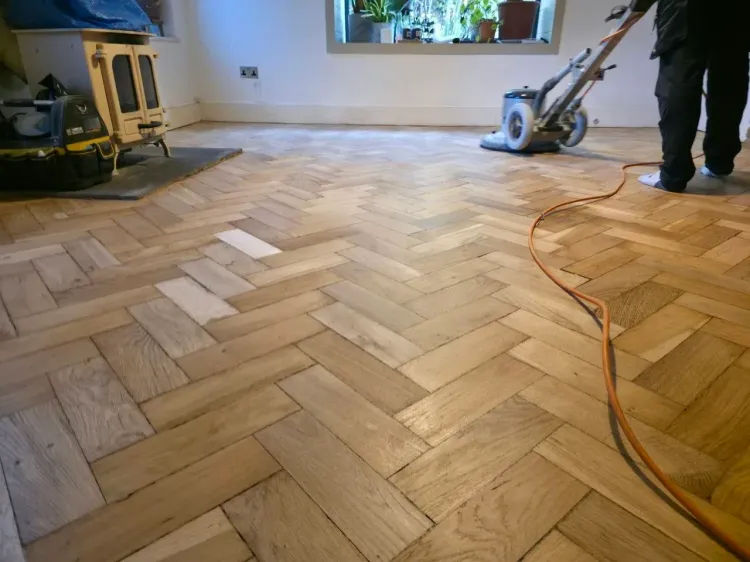
When Should Floor Sanding Happen During a Renovation?
Sanding too early means the floor gets damaged by other trades; too late can delay moving in. How to fit floor sanding into the order of a renovation.
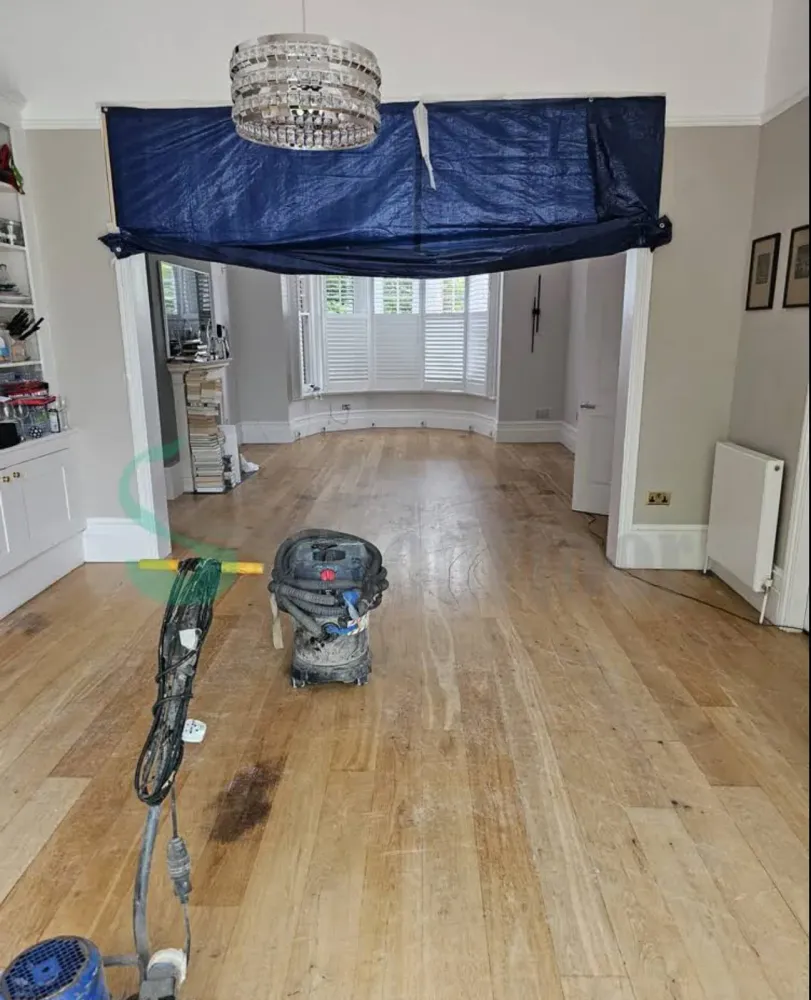
Sanding the floors in a London flat is technically the same job as in a house, but the practicalities are different. Equipment has to get up stairs or into a lift, parking may be restricted, the building may have rules on working hours and notice, neighbours share walls and floors, and a small flat leaves fewer rooms to live in while the finish dries. Planning those points before booking makes the work smoother for you, your neighbours and the contractor.
If you own a leasehold flat, read the lease and any building regulations issued by the freeholder or managing agent. They may cover:
If you rent, the landlord's permission is needed, and the landlord may in turn need the freeholder's. The managing agent is usually the best first contact for building rules.
Floor sanding machines are loud, and in a flat the sound and vibration travel through the structure to neighbours above, below and alongside. Councils across London commonly restrict noisy building work to weekday daytime hours and Saturday mornings, with Sundays and bank holidays excluded; Hammersmith & Fulham, for example, publishes 8am–6pm weekdays and 8am–1pm Saturdays for construction noise. Your building's rules may be stricter.
Practical steps:
Professional dust extraction reduces dust considerably, but some fine dust is normal, especially from edging. Read more about what dust extraction can and cannot do. In a flat:
In a house, you can usually move into another part of the property. In a one- or two-bedroom flat, the floor being sanded may include the hall, which is the route to everything else. Options include:
Remember that the floor needs time after the final coat before it can be walked on, then more time before furniture returns and rugs go down. Our guide to how long floor sanding takes sets out the stages.
Many flats, particularly conversions and newer blocks, have engineered or floating floors over an acoustic underlay. Whether these can be sanded depends on the wear layer; see our guide to whether engineered wood floors can be sanded. In period conversions, original boards are often present but may have been lifted and relaid for services, which can leave gaps and loose boards to deal with first.
It depends on your lease. Many leases require notice or consent for works, and some have rules about floor coverings. Check the lease and ask the managing agent.
Sometimes on Saturday mornings, if both the council's guidance and the building's rules allow it. Sundays are usually excluded for noisy work.
It can. Discuss with the building manager in advance, particularly if alarms are linked to a communal system.
Contact us to discuss sanding in your London flat. Tell us the floor level, lift access, parking and any lease or building restrictions so that the work can be planned around them. Read more about our floor sanding service.
Tell us about your floor and what you would like to achieve. We can discuss suitable options and your requirements.